A personal diary keeping people abreast of what I am working on writing-wise.

Tuesday, April 18, 2006

THERE'S A STORM ON THE WAY

Chris Arrant has done another article with me, this time for Publishers Weekly. You can read the full text HERE.

SAMPLE: "It's really about love, about two people finding their purposes in life and exploring them together. I'm interested in the idea of how one person's belief in another can bolster that person. Of course, that's a very high-minded slug for the book, when at the end of the day; it's me having fun with soap opera!"

Thanks, Chris! The only thing I regret is you didn't have space for my sidebar line calling Adam Warren the O.G. of OEL! He deserves more credit!

PLUG TIME: My long-standing comic book crush, Renée French, has a new book out. It's called The Ticking, and it's the loveliest little thing I've seen in a long, long time. Tom Spurgeon posted a lengthy interview he did with Renée for The Comics Journal, and you really should check it out. Marbles in My Underpants is truly a highlight in my editorial bibliography, standing on its own as perhaps the most unique material I've ever been associated with. (Do people really pay $100 for it?)

Current Soundtrack: Gnarls Barkley, St. Elsewhere

Current Mood: ingenue

golightly@confessions123.com * The Website * Live Journal Syndication * My Corporate-Owned Space * The Blog Roll

[to leave comments, click on the time-stamp below, then scroll down on the new page] – All text (c) 2006 Jamie S. Rich

OUT OF THE SINKING?

Ugh. I've been really bogged down lately, and I haven't been getting much of my own writing done at all. Plus, the day job has been getting on my nerves. I'd like to update here with something more substantial, but alas...I've been funnelling it all into getting ahead on assignments. 11th Cat volume 4 and Because I'm the Goddess volume 2 are due this coming Saturday and Monday, respectively, and Wordstock is Sunday, so it's been a nose-to-the-grindstone series of days. I'm glad to say that drafts of both are now done, and my next deadline is not until May 7, so I can spend some time clearing my head with my own stuff.

And then maybe I'll do an interesting blog post.

Moustache Watch: Day 10 of the hairy lip. This whole thing has backfired on me. Rather than proving to Joëlle that I look like a complete turd with a soup strainer, she thinks it's hilarious and has visions of me as Ron Burgundy or something. Insult to injury, Lara liked it, too, as did all the guys at the poker game Saturday, and a couple of my neighborhood gals. It's like the world has gone damn crazy!

I also blame the facial hair for the huge zit that grew on my face right next to my left ear--between it and my sideburn--over the last couple of days. It was hard as a rock yesterday, and almost the circumferance of a dime. It finally popped today, and it was awesome, because it was close enough to my ear that I could hear the pop, as well as the pus coming out in a silly string-like strand and curling up on my finger. The pop lived up to its onomatopoeic glory, and the dispersal of white stuff sounded like a string being pulled through a pipe at a high speed. A rare and sexy pleasure to be sure! (These details shared especially for Kelly Sue.)

Other goings on: Lara and the ever-excellent Stolen Sweets will be opening for the also excellent Vagabond Opera on Thursday. Details on the Vagabond site. The current plan is to go after the Harvey Pekar appearance downtown.

Current Soundtrack: shuffle, and I'm too lazy to tell you what. Deal with it. It's 3:48 a.m. and I've been going since 10:30 a.m. What about you?

Current Mood: finished

golightly@confessions123.com * The Website * Live Journal Syndication * My Corporate-Owned Space * The Blog Roll

[to leave comments, click on the time-stamp below, then scroll down on the new page] – All text (c) 2006 Jamie S. Rich

Friday, April 14, 2006

PERMANENT RECORDS: YOUR UPSTART CHARGE IS COOL AND SMART

Permanent Records is a year-long project. Each Friday (or thereabouts), I will post a new entry about one specific album, chosen due to its significance to myself as a fan. Though the list is numbered, a particular record's placement should not be considered a ranking. There will be 52 albums in all.

This endeavor is based on a concept started by Chris Tamarri at Crisis/Boring Change. It has since been expanded as a concept, as Neal Shaffer takes on a study of album covers over at Leftwich.

Tamarri better watch out, though. I'm catching him.

38. THE AUTEURS - AFTER MURDER PARK (1996)
Personnel: Luke Haines (vocals/guitar/harmonium), James Banbury (cellos/Hammon/korg), Alice Readman (bass), Barney C. Rockford (drums)
Producer: Steve Albini/ Label: Hut U.S.A./Vernon Yard


As I've said before, early on in the undertaking of this project, I came up with several different ways I wanted to approach writing specific entries. One was to engage in a dialogue with someone over an album. My immediate first choice was my good friend Christopher McQuain, who I have known for over a decade and attended many a concert with. We've debated music and movies in person all through our friendship, and at one point, I even proposed we somehow turn our disagreements over cinema into a column for a paper we were both writing for. Nothing came of it, but this piece here is a testament to my longstanding belief that the way he and I attack art is worth reading.

When it came time to do this, I told Christopher to pick a record. He came back with two choices, but it was clear this was the one he wanted. I was ready to bring my A-game, because as anyone who has read his own blog, Trappings, is aware, Christopher writes on a cerebral high wire with a dictionary as his only net. I did my best not to be left standing on the platform as he winged his way over the rope.

Jamie S. Rich: In thinking about talking about After Murder Park, I decided to cast back to what was going on at the time in music. The record came out in 1996, arguably the zenith of the Britpop phenomenon of that period, the year everything boiled over. This means that the Auteurs were writing and recording it probably sometime in 1995, when Pulp released Different Class, when Oasis and Blur had duked it out in the media, Radiohead came out of the one-hit-wonder bin with The Bends, and Supergrass and a host of other young bands had debuted. '96 saw the Oasis-side of things crystallize with the popularity of Ocean Colour Scene's Moseley Shoals, giving a leg-up to the dadrock contingent, and I know for both of us that year Suede's Coming Up was hard to beat. In general, the mood was up, it was bright, and the hangover that was on its way didn't yet feel like it was on its way (Blur would put out Blur next year, and surely there is no better signpost of everyone's fuzzy headedness). It seems like you and I were going to gigs constantly, and my entire paycheck was tumbling into the import bins so I could keep up with all the new music.

In the midst of all this debauchery strolled Luke Haines. The Auteurs hadn't released an album in two years, and that record had more in common with the pre-Britpop movement that the UK press dubbed the New Wave of New Wave than it did with what was to follow, and yet it also hinted that Haines could be part of that whole Carry On Campers vibe if he had wanted to be. He didn't want to, and to make sure we all understood that, he brought noisemeister Steve Albini in to record an album of menacing songs about killing. It wasn't the move anyone expected, and yet it was so exhilarating, so out there. It was like Luke Haines was sent as some avenging angel, crashing the party with a chainsaw, and he wasn't going to leave until all the drunken teenagers were dead.

Christopher McQuain: Yes, it's completely apt to place the album in the context of the frenetic, fecund, apparently endlessly proliferative Britpop scene of the time; remember the (apocryphal?) story about Haines demanding that Suede hand over the '93 Mercury Prize, which he felt should've been given to [the debut Auteurs album] New Wave? This was at the awards ceremony itself, no less, and that was well before the massive '95-'96 success of Oasis, Blur, Pulp, and a host of smaller players and wannabe bands. I don't know that the brilliance of After Murder Park can be attributed entirely to Haines's resentment at being a first-rate artist yet getting nothing but the crumbs when it came to album sales, but the album is decidedly what Haines claims: the "anti-Britpop." Whereas the cream of the Britpop crop (Suede and Pulp) made--in Coming Up and Different Class, respectively--for elegant and eloquent, bemused, and not entirely uncritical observers of the rush of the time and the joys of misspent youth--the drunken teenaged antics you mentioned--Haines ended up being oh, just a tad more opinionated and pessimistic.


That doesn't make After Murder Park any less "British" than the other records mentioned, though. It's just less about being of the time than staunchly against the time; if it seemed like a party in Cool Britannia as Blair was voted in and cheeky-smart lads 'n' lassies (well, Elastica, anyway) commandeered the pop charts, Haines was going to bring a much-needed sense of history to what it seems he saw as a very false and fleeting sense of optimism. That wake-up call came in the form of paranoiac, politically charged, contentious lyrical themes and tunes equal in catchiness and propulsion to the best Britpop of the time--with the crucial difference that these songs have their mufflers corroded all the way through, aurally speaking. Haines's powers of observation and anecdotally expressed emotion are equal to Brett Anderson's or Jarvis Cocker's, and certainly "Married to a Lazy Lover" and "Fear of Flying" are melodrama-queen epic ballads as glammed-up, class-ridden, and sordidly detailed as anything by Suede (or Bowie or Roxy Music, for that matter) fitting that description.

But the comparatively spartan sound of After Murder Park is a shock and a revelation: though he had worked with the Wedding Present and PJ Harvey, Steve Albini had made his name crankily producing platters by peculiarly American bands like the Pixies' Surfer Rosa and Nirvana's In Utero; his image was that of an angry, tough, even misogynistic pissed-off American Male (a not very deserved reputation, if his behavior when you and I met him briefly at a Shellac show was any indication). More to the point, for those of us (like me and, I assume, you) who experienced the English approach to pop music as the worldly, sophisticated, and much more literate and melodic rebuttal to the blandness and provincialism of testosterone-addled American grunge, the idea of a band like the Auteurs going for a "raw" sound would have seemed anathema. But Haines's lack of American-style macho insecurity--the kind of willingness to falsetto-ize and be epigrammatic ("I wanted glamour, not tragic rock 'n roll," "more hate mail through the door, didn't know that Sundays could be useful after all") that will still get you called a fag by boys who are more into Poison or Henry Rollins--not only survives Albini's muscular production but is somehow actually enhanced by it.

I don't know if it's the tension between the "American" sonic approach of Albini's production and Haines's after all very English songwriting that makes After Murder Park so unique. I do know that even beyond the marked increase in lyrical foreboding between this album and the preceding ones, the more conventional production of Phil Vinall never did the same kind of justice to the Auteurs' arsenal of instrumentation; Albini's drum and electric guitar sounds are famously "chunky" and unprocessed, but the acoustic guitar, violin, organ, mandolin, and French horn on this album are just as disorienting, almost spookily immediate. The xylophone isn't just "delicate"--it's a ballerina pirouetting atop a volcano. To paraphrase Stanley Kubrick, who was speaking of his visual ethos of "not the photograph, but the photograph of the photograph," the album does not really have the "real" or "natural" sound we're tempted to attribute to it. Rather, it has a rigorous extremism, an excessiveness, a commitment to the hyperreality of each element--to each instrument sounding more like itself than itself, if possible--that is, in its way, more formal and accomplished than most of the other records of its place and time.

I actually first came to After Murder Park as an Auteurs virgin; I had read a Spin review that mentioned "Haines's Morrissey-weaned voice" and Albini (who I knew from Rid of Me), and was intrigued enough to buy a copy. I wasn't expecting something so towering, though; I hadn't realized the vast disparity between the attention paid to the band and the attention they were actually worth. I then worked backwards through the first two excellent albums, but this third is still my favorite. Nothing else they ever did sounds quite like it; I'd even venture that the singularity of this record extends well beyond their own catalog to the entire pop-music universe.

JSR: You're right in that the expectation of what Albini's normally skuzzy production would make the Auteurs sound like was scuppered by the final product. In keeping with the sense that After Murder Park was some kind of revelation, you hit the nail on the head when you said that the previous albums had not done the band justice, and that Albini's knob twiddling made it become all the more clear. It was almost like he walked in and discovered some settings that no one had noticed had been turned off and he just turned them on. It was like the Auteurs sound had been submerged, and after he opened the doors and released the ballast, After Murder Park bobbed to the surface, and once Albini let it out, there was no stopping Haines. Certainly the phantom limb of Baader Meinhof and the forthcoming sonic clarity of Black Box Recorder affirms that. There is a fury to the music, and it comes out in the orchestration of the strings. It's hard to tell if the violins are being strangled or we're hearing their strings being used to strangle someone else.

It's interesting, I didn't know you were new to either Haines or Albini at the time, because I always remember you as a fiend for both. I had the prior Auteurs albums and enjoyed them, but never quite as much as After Murder Park. Hearing the growth made me back up and re-examine where the band had come from, and I began to appreciate them more. Previously, my favorite Auteurs song had been "Lenny Valentino," probably because it had a certain swagger that the other songs didn't. Lenny could waltz into Murder Park and hold his own, you know? If you look at the iconography Haines was playing with prior to Murder Park--well, on New Wave's cover, the sole image is a mustachioed dandy, a little Lawrence of Arabia, perhaps too foppish for Britpop laddishness. This was followed by the battered and beaten cover star of Now I'm a Cowboy, the title being partially ironic and partially an acknowledgement that Haines was a maverick. The New Wave of New Wave fizzled before hitting the shore, and that did kind of leave him out on his own. After Murder Park is him with the knives out. There is no longer even a figure on the cover, merely a dangerous, foreboding landscape, a bombed-out forest. He could be lurking anywhere. (On that note, it should be noted that Haines was well ahead of Aphex Twin when it came to disturbing images of little children marked with his visage (though, to be fair, both are by Chris Cunningham). The cover to "Kids Issue," the sidebar single to Murder Park (the A-side is not on the album, making two of the three singles non-album tracks; only on a record this good could you leave off "Back With the Killer Again"!) and the inlay of After Murder Park was of Haines in a crowd of school children, all wearing the same grim mug as his.)


Albini was a perfect partner. I knew him as the scary guy behind Big Black and a notorious band I had never heard, Rapeman, named after a notorious Japanese comic I had never read. But Big Black's Atomizer was a soundtrack to my small-town high school life, as it was for so many others. Songs like "Kerosene" and "Jordan, Minnesota," where boredom breeds taboo reactions to one's lack of a life, providing an odd kind of hope. If I could burn this town down, I can walk away. There was a sense of Albini and Haines being kindred spirits.

I'm tempted to say that this is because they maybe had a similar perspective on modern life (and there, I just did). Luke Haines' work with all of his various bands could possibly be summed up as being about how human nature disappoints him--though I think that would end up casting the music in too negative a light. It would presuppose some kind of faith in his fellow man that I don't think he has. The continued failing of humanity is always exactly what he expects, and it excites him in some weird sado-masochistic way. He enjoys man's flaws, and he revels in them. The worse the world gets, the more pleasure it brings him. But the only affection he can lend his fellow man, the only action he can take on society's behalf, is to eradicate it.

This, in a sense, would usher us on to something else. There is a hint of the supernatural in the songs. There is some distrust of it, to be sure--the dismissive references to psychics in "Unsolved Child Murder" and the title track, the incendiary attack of "Buddha"--but then there is "Dead Sea Navigators," where we get the sense he will only share a toast to "those not with us," the people who have earned their stripes by passing through some dark ritual. "And our friends, though they are few...and what's left of your nerve will get you through/ from Brighton down to Eastbourne/ sea sick sailors getting tough/ but the dead sea navigators/ were made of stouter stuff." Brett Anderson and Jarvis Cocker write about traveling in small packs, as well, but they are huddling together to stand against those who would label them misfits. In the world of the Auteurs, no one else pulled you through, there is no helping hand, just the bar stool on the other side. Haines may be leading us to Murder Park, and the title suggests that there is something after it, but what lies beyond is the important question, and it's up to us to sort it out. He won't tell us, but in revealing that we can only live through death ("we are lying here/ waiting to be buried...losing contact with the dead"), he lets us in on the secret because he loves us "until the end." Not so misanthropic after all.

Having just seen V for Vendetta, I think there is a context for this kind of British sedition--that history you suggest. Isn't Haines invoking a spirit not unlike Guy Fawkes? Or perhaps something like the decadent wits who used the pen to tear at Victorian values, such as Oscar Wilde? There is, as you say, a sense of foreboding throughout his narratives. The hate mail through the door, the maid dealing in state propaganda, the notion that everything you say will destroy you--these are all indicative of a claustrophobic atmosphere, a grip we have to wrestle our way out of. If you compare being a dead sea navigator to being a "land lover--terrified by the land" or someone who has a "fear of flying...eating you whole," there is a sense that other people are living while restrained, breathing despite the ties that bind. In comparison, the rhyme in the chorus of "Fear of Flying" is made by invoking the antecedent to those people: "I have no fear of dying at all."

I suppose, for me, that's my doorway into what Haines does for me on a personal level. For all the academic explications we can give, in the end, what makes an album part of my personal library is some kind of connection to my own life. I see in the Auteurs an expression of the Garbo side of me that just wants to be alone, that isn't accepting that my fellow citizens have any genuine sentiment towards me, that believes life is gritting the teeth and carrying on, and in that, beating it. It's something I've tried to write about, to be sure, this escape, this release. I admire Haines because he's able to take it all the way to the bitter end before bouncing back.

Is there something about After Murder Park that you think speaks for you?

CM: Well, I can definitely relate to what you're saying about Haines's apparent misanthropy speaking to (and, in that singing-along-in-private way that seems silly but that all serious pop music lovers share, I think) for me--expressing things I feel in a way that's so right, so sharp, that I wish I'd thought of them. That's my litmus test for great lyrics: my own level of envy toward them. I do have this persistent feeling that life is in so many ways disappointing and unfair--even pointedly cruel--and a conviction that the sunshine in it is going to be heavily outweighed by the rain, that there's no guarantee that everything's going to balance out . . . and thus I have the privilege of really enjoying the fact that almost any song written by Luke Haines expresses and/or addresses those feelings in some way, be it sardonically absurdist-humorous or inflamed with resentment (or, at its best, both at once). If you relate to it, Haines's acknowledgment and reiteration of that omnipresent disparity between the kindness and fairness--dare we say "love"--we can visualize and the fear and loathing we actually feel and see around us is gratifying, liberating, and in a way reassuring: someone else resents the disparity, too, they understand it, and they're alight with creative inspiration over it!

But as you say, that misanthropy is balanced. I think what balances it is a kind of tenderness, which is probably the true root of most misanthropy--a generally good feeling toward one's fellow man that's been proven unfounded just a few too many times. On After Murder Park, that tenderness is manifest through the elegiac mournfulness--and yes, even that tenuous, agnostic invocation of the spiritual you mentioned, which may be an expression of the feeling of being haunted that's concomitant with these songs' themes of loss, grief, and memory--that suffuses the album, which is also something I relate to (I don't mean to aggrandize or saint myself when I say I grieve when other people suffer or experience loss, because that grief merely comes from my own identification--"How would I feel, how have I felt, when I've experienced grief or loss?"). The withering, erudite spite of "Land Lovers," "Buddha," and "New Brat in Town" are carried on an undertow of the kind of tributes to the bereft and forgotten you talked about, as heard in "Child Brides" and "Fear of Flying," and of course the missing-child pair of "Unsolved Child Murder" and "After Murder Park." For me, the thrust of "Dead Sea Navigators" is, to further your assessment, Haines's feeling practically vindicated that the ones really worth celebrating are doomed to obscurity--but how beautiful to be able to say, "Even in their heyday, no-one like them. . . 'cept for us"? That's solidarity, Luke Haines style! Even though "Tombstone" is a bilious, perfectly articulated attack on Haines's peers (the Britpop success stories ensconced in the Columbia Hotel, who he fantasizes bombing "Baader Meinhof style") that, like "New Brat in Town," uses an old-West metaphor for his dismissal of them, even here, amongst the misanthropic "everybody's gonna get it" lines, he still comes out with the regretful "I wanted glamour, not tragic rock 'n roll." It's in the singing, too--lines like "Throw yourself at the tide/I'll see you on the other side" (in "Child Brides") wouldn't quite mean all they do if his voice didn't break in that unexpected, spontaneous-seeming fashion; the way he sings "sack the maid" at the end of "Married to a Lazy Lover," after the raging roar has suddenly subsided, sums up through much more than just the words the endless waste and infidelity of an empty, subterfuge-filled relationship--that song casts a whole new light, as does much of Haines's work, on the old adage about the personal being political (or is it vice versa?). Speaking of which, I will have to see V for Vendetta to see about the Guy Fawkes connection, but I know Haines probably wouldn't mind being seen as some kind of instigator of subversive, contrarian dissent--his interest in such is pretty clear, both here and, of course, in a very pointed way on the Baader Meinhof side project. I like to think that the mug they sold on the Black Box Recorder tour--the iconic photograph of Lord Lucan from the "England Made Me" single sleeve on one side, the words "shame of the nation" on the other--were his idea.


I realize now, as I revisit the album and ponder its themes and execution, that it's much "darker" than I usually think of it as--but I have that thing where I think of albums or books or films in terms of their power, so even if it's "dark," it couldn't possibly be depressing if it has the power to move me or reach me in some deeply engaging or profound way. After Murder Park is such a triumph because it's grappling with things like death, failure, and crisis, things so irresoluble and burdensome in all of our human narratives--things usually not dwelled upon, perhaps for fear of getting mired (this is addressed in "Fear of Flying" with the beautiful and disconcerting lyrics "you may be wary of ghosts of the past/sexless and incorrigible in the dark").

The struggle to really ascertain and then to make peace (or at least live) with all that's been denied us, all that's been taken from us, and all we've lost--and again, any human life contains unacknowledged worthiness and unreconciled loss--is the ultimate project of After Murder Park; and even though nothing so simplistic or final as closure or reconciliation is on offer, this album is important to me just because it's willing to go so deep into the complexity of all those things and is miraculously able to come up with something that's possessed not only of coherence and clarity, but also of a passion that is finally, undeniably alive. Haines & Co. create a context in which "Sod this town and people's pity/Let's get on with the nitty-gritty" is simultaneously a deliciously snippy, satisfying fuck-off borne of profound pain and a life-affirming, transcendent credo.

JSR: Interestingly, as I read your response, my iPod shuffled over to "Black Celebration" by Depeche Mode, the title track to one of my top-five all-time albums. It's a song that brings me comfort. It's not a pity party, it's about letting go of the toil and the strife. I think both of us have as our core favorites a lot of music that the finger-pointing masses would label "depressing," and I think we've both kicked against those pricks quite often. It's certainly a misguided notion that I have tried to redress through my own writing, this idea that music with hints of tragedy somehow inspire tragedy. The reasoning that people like Luke Haines create music that is so meaningful to its fans because they expresses thoughts that we, as individuals, usually felt only we experienced has become a hoary old cliché, and that's because, like most clichés, it's true. There is something gratifying in having an articulate--and usually funny, for misanthropes are generally the funniest of the lot--poet peel back the curtains and say, "No, all of us have had these days." As much as I love "Sunshine, Lollipops & Rainbows" by Leslie Gore, it's only the occasional day where I feel in line with the sentiments the song expresses. Whereas "Everything You Say Will Destroy You" has been a constant mantra long before Luke Haines did me the favor of recording it. (There seems to be an unlimited amount of opportunities for this big mouth to strike again.)

Could it be that if we boil this all down, the reality of it is, for as outlandish and outside as After Murder Park may seem, it could also be fiendishly normal? Could the songs of the Auteurs be more about everyday life than anything in the Top 40?

There are many ways to interpret the lines "everybody eat your dust/ everybody love your dust" in "Light Aircraft on Fire," but one could easily be, "Embrace that which makes us human rather than let it grind you down." Dust is everywhere, and you, as an individual, are not--and in that is perfection.


CM: Oh, yes, After Murder Park is much more about everyday life--and real feeling--than anything considered "mainstream." But people's real everyday lives, doubts and fears included, are a traditionally very unpopular theme (especially these days, it would seem) and that's what keeps an album like this so far below the upper echelon of that fake hierarchy, our culture's need to rank and oppose "positivity" and "negativity"--as if every day wasn't a constant vying between the two, both inside and external to each of us! After Murder Park does fit into that category of music I know you and I both love, which, contrary to popular belief, can hardly be considered "depressing" for containing both sardonic/gallows humor and actual melancholy; it is a much richer proposition than having to choose between monochromatic "positive" or "negative." If not a catharsis, this kind of music is at least a working through of life's many problematic spots--not the wallow it seems to the Polyannas of the world.

What's etched, sonically and lyrically, into After Murder Park's grooves is something that no thoughtful person could really find depressing: a deep, acute, exacerbated-raw awareness of how important yet elusive actual human dignity and grace are in this world (not to mention an extensive unpacking and rearticulating of that well-worn bit of knowledge about human life itself: the tenuousness, fleetingness, and therefore value of our fragile physical existences). The album traverses its tortuous yet almost unbearably melodic path from crisis ("Light Aircraft on Fire") through deep loss ("Child Brides"); politically partisan paranoia ("Land Lovers"); simmering spite ("New Brat in Town," "Everything You Say Will Destroy You," "Buddha")--and then on to bittersweet short stories of severed or broken relationships ("Unsolved Child Murder" and "After Murder Park;" "Married to a Lazy Lover"), haunted memory ("Fear of Flying"), and the travails and secret tender spots of popular music ("Tombstone," "Dead Sea Navigators"). But, as you mentioned before, there are these beautiful calms after the storms that embody authentic, hard-won hope: "I'll see you on the other side;" "Raise him from the dead;" "I have no fear of dying at all;" "What's left of your nerve will get you through."

You also made the astute and meaningful observation that the last thing sung on the album is "I'll love you until the end,"--and the title is, after all, After Murder Park. We all have survived (or, less happily, will survive in the future) some or all of the things it's Haines's pleasure to evoke with such passion and power, and we become the people we are almost as much by the decision to wring whatever we can from them--or, conversely, merely to block them out--as we do from the experiences themselves. I'm reminded of the big-picture perspective of the heroine of Margaret Atwood's The Blind Assassin (another work about loss, memory, and what happens "after" someone is wrenched away) when she muses: "But why bother about the end of the world? It's the end of the world every day, for someone." For those of us who know that kind of stoically wise, sobering (yet clarifying and not altogether humorless) realization and its expression to be valuable, compassionate, and true, After Murder Park is a heroic work of art.


#52 #51 #50 #49 #48 #47 #46 #45 #44 #43 #42 #41 #40 #39


Reminder: As always, this post is full of links to Amazon. Click on any one of them when shopping, and Amazon will shave a few pennies off their take to give to me. So, if my reviews make you all hot and bothered and you just have to own one of the things I'm talking about, use my link and contribute to buying me more stuff to review. (Those reading a Live Journal feed will likely have to click to the actual blog page first before heading over to Amazon, though.) Either way, thanks for reading.

Current Soundtrack: "Survivor: Exile Island;" Fiona Apple talking to Sasha Frere-Jones

Current Mood: predatory

golightly@confessions123.com * The Website * Live Journal Syndication * The Blog Roll

[to leave comments, click on the time-stamp below, then scroll down on the new page] – All text (c) 2006 Jamie S. Rich

Thursday, April 13, 2006

I'LL NEVER BE ANYBODY'S HERO NOW

The manuscript for The Everlasting is now in Oni's hands. So, I can breathe easy for a little while, until the layout comes in. I also got the second volume of a manwha called Hissing in yesterday, right on time. The schedule is freeing up.

As a reward, today I watched The Unforgiven with Audrey Hepburn, and I got a haircut. I do so love getting a haircut. I'm seeing Lara Michell for drinks tonight, so she will benefit from the good mood that comes with being freshly shorn. Also...

Beard Watch: I gave in yesterday and shaved under my chin. I didn't need a furry turtleneck. This morning, I took off the beard itself, since I would want my sideburns trimmed if I got a haircut. I stopped first at a goatee to see what it looked like. I wanted to punch my own reflection. I looked like a total dick. So, just the 'stache. I skipped out on doing the pornstar moustache, so as it continues to grow, it's going to be more like "My Name Is Earl." It makes me look less like a dick and more like an asshole. Which is more honest to my true nature, really.

Current Soundtrack: Yeah Yeah Yeahs, Show Your Bones

Current Mood: refreshed

golightly@confessions123.com * The Website * Live Journal Syndication * My Corporate-Owned Space * The Blog Roll

[to leave comments, click on the time-stamp below, then scroll down on the new page] – All text (c) 2006 Jamie S. Rich

Wednesday, April 12, 2006

PURPLE PROSE

Randy Lander over at the Fourth Rail has picked the first volume of Love the Way You Love as one of his top ten comics to be released in June. It's a nice blurb. Go read the whole thing, but have a taste: "Rich has a unique sensibility that should be perfect for romantic comedy, and Oni has shown themselves to be good at this kind of thing...." Aw, yeah!

Given that Randy links to the Oni page and plugs a five-page preview that was not there, I picked five pages and put them up, so go look. They are actually pages 7 through 11 for anyone who is wondering...

Beard Watch: Day four, no razor.

Current Soundtrack: Mystery Jets, Making Dens

Current Mood: sore

golightly@confessions123.com * The Website * Live Journal Syndication * My Corporate-Owned Space * The Blog Roll

[to leave comments, click on the time-stamp below, then scroll down on the new page] – All text (c) 2006 Jamie S. Rich

Tuesday, April 11, 2006

BECAUSE MAYBE, YOU'RE GONNA BE THE ONE THAT SHAVES ME

!!BEARD ALERT!!

Back in college, I had a ritual during finals week where I would not shave until I was done with all my work. It was incentive to stay focused, because I loathe facial hair. I loathe many things, but nose neighbors are really up there on the list. Sooner I got done, the sooner I could spring my face from its hairy prison.

So, I am doing that again. I must complete this week's work. I must! Plus, someone keeps hassling me to grow a moustache for her amusement. This way, I can also show this person how horrible I will look with a 'stache and get her off my back. It's going to be horrible for me, because I'm going to look like my father!

My face has not seen a razor sine Saturday. I'm starting to look like this:


Current Soundtrack: Tarkio, Sea Songs for Land Locked Sailors

Current Mood: dirty

golightly@confessions123.com * The Website * Live Journal Syndication * My Corporate-Owned Space * The Blog Roll

[to leave comments, click on the time-stamp below, then scroll down on the new page] – All text (c) 2006 Jamie S. Rich

MY ELECTRIC SYMPHONY IN BLUE

It's really happening folks.

The Everlasting is now listed on Amazon.

It says September, but it's actually being released in August. No cover yet, but there it is. I don't know what made me think to look for it. I guess closing the file on the manuscript for the book after approving the copyedits (minus a handful that have to be discussed on the phone with the copyeditor), playing my writing mix in the background, and being a little vain.

It's so cool to see it listed, though, to see the title and my name. The Everlasting by Jamie S. Rich. *sigh*

I was e-mailing Maryanne tonight, and we were discussing the copyedit. I noted to her that a particular passage always cracked me up, and I will share it with you. On Halloween, Lance's roommate is trying to talk him out of going to an indie rock party in favor of going clubbing:

Roger exhaled in defeat. “Okay,” he said, “but you promise me, if anyone shows up as a Beatle, Rolling Stone, or either Crosby, Stills, Nash, or Young, you’ll get the hell out of there and come find me.”

God bless you, Roger.

Strangely, Love the Way You Love is not yet listed. Errrr, paging Mr. Oni!

Current Soundtrack: my Everlasting mix, disc 2

Current Mood: ditzy

golightly@confessions123.com * The Website * Live Journal Syndication * My Corporate-Owned Space * The Blog Roll

[to leave comments, click on the time-stamp below, then scroll down on the new page] – All text (c) 2006 Jamie S. Rich

Monday, April 10, 2006

WHO THE FUCK IS JAMIE S. RICH?

The Wordstock 2006 website is now UP. I will be attending the second day.

My personal listing. (Nice of them to get my name right in the big bold part, yeah?)

The listing for the panel I am on (Matt Wagner is my hero):
Sunday, April 23
1 pm – Graphic Novel Panel
McMenamins Stage, B113-114

- Jamie Rich – author of two full-length graphic novels, 12 Reasons Why I Love Her with artist Joelle Jones and the ongoing series Love the Way You Love with Marc Ellerby
- Matt Wagner – author of the star-studded Dark Horse miniseries - Grendel: Black, White & Red - winner of two Eisner Awards, for Best Anthology and Best Short Story.

A book signing is alleged to follow the panel.

And, dude, Chuck freakin' Barris is going to be there, too!

Current Soundtrack: Arctic Monkeys, Who the Fuck are Arctic Monkeys? EP

Current Mood: gloomy

golightly@confessions123.com * The Website * Live Journal Syndication * My Corporate-Owned Space * The Blog Roll

[to leave comments, click on the time-stamp below, then scroll down on the new page] – All text (c) 2006 Jamie S. Rich

Saturday, April 08, 2006

DON'T GIVE UP ON THE DREAM, DON'T GIVE UP ON THE WANTING

My to-do list is insane.

I have four separate scripts and manuscripts that are started and that I am working on, and one more I haven't really begun

I have at least one manga or manwha due every week until the end of May.

Only one of my four short stories I am currently shopping is out there at any magazines, so I have some mailing to do.

The copyedit on The Everlasting is back, and I need to go over that and get it into production and start thinking about how it and Love the Way You Love should be put together.

I'm not sure how much longer it will go on, but this past week and the forthcoming week, I've also had to pick up an extra shift at the video store.

This is not me whining, this is me sorting out my head. I am pleased to be so busy, blessed to have it be with stuff I want to do. At the same time, if you don't hear from me or see me around, you'll know why. I'm down the rabbit hole. Even as temptation beckons...

Current Soundtrack: Depeche Mode, "Precious/A Pain that I'm Used To/Suffer Well" singles - remixes & B-sides on shuffle

Current Mood: stressed

golightly@confessions123.com * The Website * Live Journal Syndication * My Corporate-Owned Space * The Blog Roll

[to leave comments, click on the time-stamp below, then scroll down on the new page] – All text (c) 2006 Jamie S. Rich

Friday, April 07, 2006

PERMANENT RECORDS: OUR SATELLITE STORIES

Permanent Records is a year-long project. Each Friday (or thereabouts), I will post a new entry about one specific album, chosen due to its significance to myself as a fan. Though the list is numbered, a particular record's placement should not be considered a ranking. There will be 52 albums in all.

This endeavor is based on a concept started by Chris Tamarri at Crisis/Boring Change. It has since been expanded as a concept, as Neal Shaffer takes on a study of album covers over at Leftwich.

39. MISS RED FLOWERS - MISS RED FLOWERS (1997)
Personnel: Amy Kent (vocals/guitar), Jessie Spero (drums/percussion), Kevin Friedman (guitar on "Velvet," "Ocean" & "Satellite"), Marilee Hord (violin on "Abby" & "Rama")
Producer: Miss Red Flowers & Thor Lindsay/ Label: Tim/Kerr Records
Album cover art: Adam Warren; band logo: Tom Orzechowski


I feel a little trepidatious writing about the Miss Red Flowers record because my relationship with it is a little bit personal. In the mid-'90s, I spent time hovering around the Portland music scene as a fan and critic. I was writing for local papers and co-hosting a cable access show about Britpop, and then going out to clubs and listening to bands and having drinks. It was a good time, and I made some long-lasting friends. It was also an education.

When the album was released, I was friends with Amy Kent, the lead singer, guitarist, and songwriter for Miss Red Flowers. We had met when I interviewed her for my first ever article about a band. It was for a now-defunct magazine called Anodyne, and I handled it rather ineptly. Here is a piece of advice for all budding journos out there: when you write an article that is way longer and rougher than it should be, if you end up doing a second draft in a separate file on your computer, make sure to title both files in a very clear fashion. Otherwise, you might end up turning in the first draft, no one will notice how unfinished it is--even if it has sections where, instead of words, it says, "????"--and that will print instead, much to your horror.

Anyway, I met Amy, interviewed her down at a pub on Hawthorne, across the street from her indie record label's offices, and we became fast friends. Eventually, I wanted more out of the friendship, and I spent a lot of time kicking against a closed door because I had convinced myself that there was something for me on the other side. I was a frustrated young man, and I am sure I caused just as much frustration for Amy as I did myself. We tried to maintain what was really there for a while, and I even ran her band's mailing list, the fulfillment of a bit of a dream for me. I did newsletters and sent out postcards and it was a lot of fun. Unfortunately, my inability to let the other side of things go eventually meant that none of it would last. (And, yes, careful readers may put two and two together and realize that given the timeframe, this was indeed the girl whose voicemail I assaulted with Longpigs melodies, as written about last week.)

Despite all that, I've tried to allow the music to stand on its own, to not let the things that happened in real life taint my enjoyment of an album that meant quite a lot to me. There is nothing comparable to being around when something is being created--be it music or comics or whatever--and you can feel deep in your bones how special it is. I remember listening to the promotional EP of Miss Red Flowers songs before the interview session. They were tracks recorded for the WFMU radio station in New York. The album wasn't out yet, I had pitched my idea for an article on the band after having seen them live, opening for someone else. Most of the local scene bored me, so that performance was a real epiphany, and I think when I told my editor what I wanted to do, I said something like, "Miss Red Flowers is the only Portland band that I have any interest in talking to." And I vividly remember sitting in my bathtub, listening to those five songs, and thinking, "Wow, I can't believe I am going to talk to the person who did this tomorrow."


All through my association with Amy, I would be consistently amazed at the effect she had on people. The reaction was instant and it was heavy. After a gig, I'd be sitting at the table selling CDs and gathering names for the mailing list, and people would come up and ask, "Do you know her?" as if she were some untouchable, unreachable star. "Yes, I do know her, and she's standing about five feet away from you right now. You should go say 'hi.'" When you hear them talk about stars having an X-factor, they were talking about this, that indefinable thing that makes people react in these ways.

What was it, then, about Miss Red Flowers and their one gem of an album that was so extraordinary?

The first thing that you're likely to notice is the voice. Amy's singing has a haunting lilt to it, as if she were caught between two planes of existence, the girl who feels pain and the woman who wants to strike back. The sound of it is unadorned, lacking studio twiddling or even training. On the best song on the album, "Velvet," the only overdubbing is to create a twin effect, of an echo one syllable behind. On certain lines, you can still hear a breath being taken. Off in the back, there are whale cries that only become evident as Amy's moaning the deeper we get into the track, when the echo catches up, and all are one. (It should be noted, though, that "Velvet" is one of the songs where drummer Jessie Spero is credited with back-up vocals, so it really is two.)

It has a deeply personal effect, which is the second thing you notice: Miss Red Flowers is a personal record. The first two lines of the album are "Here I am/ Alone again" (from "Dear James," a song that is not about me no matter how much I would love to say it was). Listening to this record is like being alone with someone's private thoughts. The lyrics do often take off on poetic flights of fancy--"I'm content to be your fool for now/ Until my mouth opens so wide/ I gobble you up with the world--that instantly give way to bald language devoid of any subtext--"It hurt me when you told me/ I got in the way/ It hurt me when you left me/ For most of the day." Too often, a writer would be embarrassed to gravitate between the two extremes, and academically, indulging in both in the same song would likely be poo-pooed. Except our inner lives know nothing of academia. No one is grading us on how our emotions unspool. Just let it come.

Which isn't to say that there is no editing process to how Amy writes. The truth of stream-of-consciousness writing is that you have to know when to dam up certain things, controlling the passageway for what's important. If there was no filter, there would be all sorts of gobbledygook, and it wouldn't make sense to other people. The audience for Miss Red Flowers never had this problem. I listen and the course of the stream is clear to me. I ride it as if on a raft, and the thoughts that travel beneath me are ones I can understand.

Or to swap metaphors, it works like a magic spell. Songs like "Ocean" entangle you in their language and lull you into a sense of the familiar, that you've been here before. The soft strumming of the guitar is secondary, almost absent-minded, its reverberations pushing you out of normal space. This is music to lose oneself in, best enjoyed with the lights out, flat on your back, looking for the same thoughts somewhere across the distance of your mind. Much of the lyrical content is about escape, about finding this space. On "Ocean," Amy sings about how "The best things in life/ Are at the bottom of the ocean...And I'm never coming back because I know/ Where I really want to be."

"Her Own" speaks of similar things: "Wishing for an edge of the world/ Somewhere to jump off/ And never to be found." I wrote a short story that borrowed its title from that line. Listening to "Her Own" again, I realize that in writing my story, I missed the point of the song. There is a tension between the singer and her lover, as images of her as "a shooting star" are really all in his perception, and something she can't live up to. In fact, his needs are sucking out any interplanetary light she may actually have in her. "Looking after you/ And chasing my desire/ So far away." In the end, she needs her own world to escape from his. He's self-absorbed, too far away, stuck in his own head "gone and dead and gone and dead." I guess I probably saw myself in the role of that boy, but in an ironic miscalculation, I spun out of it with a tale about another boy chasing another girl in hopes that she would save him by indulging his delusion of saving her--which is the biggest pitfall of writing someone a story, that you will miscommunicate and be misunderstood. It's a most dangerous game. If I ever write the sequel, knowing what I know now, it would be about how ultimately she'd have to escape from the clutches of his love rather than have to consistently live up to the main character's fucked up construct of her. I'll call it Garden State II.

The production generally takes a step back--sometimes two--letting the vocals stand right up front. There are only two musicians at work here, and the songs are built for guitar and drums. Live, there was, of course, an adherence to the Spartan nature of the songs, but that arena gave the songs an immediacy, a warmth that is often absent on the CD. If there is any flaw in Miss Red Flowers, it's that the man at the mixing desk seemed to convince himself that by maintaining a distance he was maintaining the scaled-down dynamic, even as he added too many guitar effects or dropped an extra vocal coo into the background. A rollicking song like "Daisy" needs the crazy hoo-ha of the stage, especially as it's the one place where Amy really opens up vocally, the chorus swinging like a showtune. The one clear misstep on the album is "Alien Song." It's too dissonant, dragged down by an empty jangle. The chords are too deep, grating against the droning chorus, the chant of "In awe of life I die."

There are two places where the producer gets it exactly right. One is the closing track, "Rama," where the addition of beautiful violins by Marilee Hord and well-chosen nature sound effects bring the song's serenity to life. Rama, in Hindu legend, is the perfect man, and the song questions both his long absence and dreams of his return. Amy sings, "And if I go away/ And if you go away," letting her voice rise on "away" so that it sounds like it's being set free, as if we have found some peace.


The second song is the aforementioned "Velvet," and it's really an important track for us to discuss. Like I said, it's the best song on the album, and really, one of the best songs I have ever heard. It's one that never leaves me, and I cried more than once when singing along with the band as they performed in some dingy club or other. It's a once-in-a-lifetime creation, a rarity for any artist.

And probably where we must really question how I relate to this music. Am I too attached?

If "Her Own" is an example of how I got everything wrong, my misinterpretation of it maybe an indicator of how I may have placed too much pressure on the relationship, then I'd like to think "Velvet" is where I got it right. The writing is straightforward: once again, a woman describing a lover and the relationship they had together. The softness of the title, "Velvet," is nowhere in the actual song, it's more of a suggestion of what a balm for a troubled soul the song provides the listener. It's saying all the things that are so hard to say when a relationship has gone wrong for too long--the feelings of hurt and abuse persist even as we're unable to dismiss love entirely ("If I could only kiss you on the temples/ Then I could leave and finally turn the page"), the sense that your partner is better than he lets himself be ("These beastly outbreaks don't become you"), the sense that you are not as good as you pretend ("Oh why does a fool need so much company/ And why am I filled with so much rage"). It's the acknowledgement of our own misplaced motives ("But I guess that that is how I got here/ From the love of thinking someone needed me"), and the hope that both parties can escape clean ("I've dreamed of starting all over/ Only this time both of us are pure").

That last line I quoted certainly resonates with me. That's always been a desire of mine, to start fresh and on the right foot. At the time, I hoped that Amy and I could start over together, that we could be like velvet for one another, that it wouldn't be a lopsided union but one built on mutual need and support. That's the problem with my character in my story: he's not offering any of himself, really. He's playing the white knight, acting as if he is a blank slate, but it's all a sham. He's really balancing that emptiness against the spark he sees in her, and that means she is lighting the darkness as opposed to him providing a place for her to shine.

Could I have done that, too? I don't know. It's hard to say now, since I'm wrapping myself in the poetry of the music. Hindsight may be 20/20, but memory is nearsighted.

In that respect, I clearly fail at my stated intention of letting the music stand on its own. I've tried to be objective, to speak and react from outside of it all, but I keep taking it back to me. Granted, that's no different than any of the other entries in this series. I could cut out so much time by listing the title of the album and just writing, "Me, me, me!" underneath, but these are obviously flowers of a different color. To quote one of Amy Kent's lyrics, "All of my feelings are false and so am I." Was I at all objective, or do I come across as an old man ruminating on lost love? Or was I too false, trying too hard to be scholarly, and not emotional enough? I guess that's up to your subjective reading.

For those wondering how the story turns out, it's actually pretty anti-climactic. Amy and I sat down in a bar--I think it was a Brian Jonestown Massacre gig--and we both kind of apologized and tried to sift through what had occurred. I can't speak for how she felt at the time, but I sort of knew it wasn't really happening, that we weren't really going to rekindle the friendship. But, at least in some ways, we said "I'm sorry" before stepping away from one another for good. From what I understand, she's happily married with a family, and though the music fan in me wishes she had made more music, if the "happily" part is true, then more power to her.

#52 #51 #50 #49 #48 #47 #46 #45 #44 #43 #42 #41 #40

NOTE: If you have any curiosity regarding what this music sounds like, there are sound samples at Amazon, as well as multiple used copies priced between $0.01 and $1.00. Follow the button below to listen and make a purchase, and if you do, comment here and tell me whether or not I'm actually full of it.


Current Soundtrack: Serge Gainsbourg, Comic Strip

Current Mood: devious

golightly@confessions123.com * The Website * Live Journal Syndication * My Corporate-Owned Space * The Blog Roll

[to leave comments, click on the time-stamp below, then scroll down on the new page] – All text (c) 2006 Jamie S. Rich

Wednesday, April 05, 2006

HEY, NOW, LOOK WHAT YOU'RE DOIN' part 2

The first issue of Chynna Clugston and Ian R. Shaughnessy's new comic book series, Strangetown, is being released today. Published by Oni Press, it's a hilarious take on small-town life, with an insular community and strange superstitions. I wrote the back-up feature, the newspaper column of a strangely familiar, highly attractive writer who is part of the story. His name is Vernon Leach, and I just did a fun little Oni blog post as him, as well.


l. to r.: Ian, Chynna, Me

You can also read an eight-page pdf preview of the first issue.


Current Soundtrack: Sparks, Hello Young Lovers

Current Mood: self-absorbed

golightly@confessions123.com * The Website * Live Journal Syndication * My Corporate-Owned Space * The Blog Roll

[to leave comments, click on the time-stamp below, then scroll down on the new page] – All text (c) 2006 Jamie S. Rich

HEY, NOW, LOOK WHAT YOU'RE DOIN'

Everybody raise whatever they're drinking to Marc Ellerby. He turned in the lettered pages for the first volume of Love the Way You Love today. That's 66 comic book pages, folks. On time, ahead of the game, ready for our June publication date!


Love the Way You Love ordering info!

There is also a page for the book in progress at the Oni Site. Check it. Keep your eye on it, as I am sure the 5-page preview will be up shortly. I think that we are also looking to get a more extensive preview up on the ol' web, too.

Current Soundtrack: selections from Future Retro

Current Mood: bouncy

golightly@confessions123.com * The Website * Live Journal Syndication * My Corporate-Owned Space * The Blog Roll

[to leave comments, click on the time-stamp below, then scroll down on the new page] – All text (c) 2006 Jamie S. Rich

Monday, April 03, 2006

A PLASTIC DOLL WITH A FRESH COAT OF PAINT


Morrissey Watch: The new album, Ringleader of the Tormentors, is out tomorrow, and the first single came out last week. "You Have Killed Me" has three B-sides.

My favorite is "I Knew I Was Next." It's the sort of top-notch treat I have come to expect Morrissey to tuck away on the back of a single--an amiable rocker with a wavy melody. There's no great innovation, but none is needed with such a catchy hook. In keeping with his latest lyrical obsessions, "I Knew I Was Next" is all about rising up in the face of negativity. "And when you've slapped around the one more slap can't hurt you..."

"Good Looking Man About Town" reminds me of classic Bona Drag-era Bs. The sound is distant and echoey, with Middle-Eastern, sci-fi siren FX. The filter on the vocal matches the alienation of the song, the delivery possibly taunting rather than sympathetic, looking without rather than within. The sound grows even more distant with the refrain of the never-said "Marry me, marry me," the dream--and the clarity--getting further and further away. Only when Moz insists that "the dream becomes sand in my hands" does all the emotion, ironically, crystalize. All is of one piece in a world of anxiety.

Rounding it out is a cover of the New York Dolls track "Human Being." I think this is the third cover Morrissey has done of one of their songs ("Trash," "Subway Train," any others?), but the first done in the studio. The mood is raucous, with an opening countdown in Italian (Spanish? I'm no linguist, though I am cunning). Morrissey captures the intensity of the original (which Christopher kindly sent to me), letting its strengths stand tall rather than working it over too much to make it his own. The lyrics are kind of a mouthful, but he seems to relish every syllable. It's clearly the fulfillment of some teenage dream. He spits out the word "ain't" as if bad grammar is the greatest rebellion of all time, asserting our own humanity the most radical idea in this mechanical new world ("from machine to machine")!

Speaking of...

Also out Tuesday is the DVD of the documentary on the bass player for the New York Dolls, Arthur "Killer" Kane. New York Doll tracks Kane's history from the inception of the band through its implosion, and through Kane's dark years and his rediscovery of himself, leading up to the band's reunion in 2004. Since Morrissey, probably the biggest Dolls fan in history, was responsible for bringing the remaining band members back together, he's all over this thing, and the DVD packaging trumpets its exclusive twenty-minute interview with him wherever it can be squeezed in. Which, fine enough: he's elegant and eloquent throughout, the fannish joy the Dolls still bring him obvious in his eyes. It's actually quite special to hear hm talk about them, to communicate how music affected him in the same way he has so many others.

But the true star of the movie is Kane himself. He's a genuinely sweet man, and representative of every kid who ever dreamed of being part of something special. Seeing him realize his dream of getting on stage and playing the songs one more time is heartwarming viewing. The ending is a little bittersweet, but yet tidy and perfect in its own way. It's essential viewing for anyone who has ever had a special connection with a band and its music.


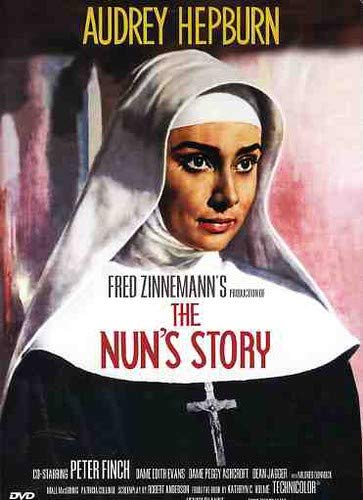
My package with both the Moz album and single shipped today, and in with it is the newly released DVD of The Nun's Story, starring Audrey Hepburn. I took a weirdly perverse pleasure in ordering these items together. But then, Morrissey forgave Jesus and is now on speaking terms with God, so surely he would approve?

Working On: Manga script for Go! Comi.

Blog Addition: The awesome Teddy Kristiansen now has an art blog.

Currently Reading: Bonjour Tristesse by Francoise Sagan (2nd edition hardcover, 1955)

And where, pray tell, are my video picks for April? Well, Trilogy Video has changed ownership, and this month we are having a tribute to our departing manager, Jake Kelly, instead of employee picks. This means my choice of Bambi for the "Little April Showers" song will be a month late, but oh, well...

Current Soundtrack: a mix of Morrissey, Babyshambles/The Libertines, Lara Michell, Jenny Lewis with the Watson Twins, Antony & the Johnsons, The Decemberists, Belle & Sebastian, Dot Allison, and Depeche Mode

Current Mood: exanimate

golightly@confessions123.com * The Website * Live Journal Syndication * My Corporate-Owned Space * The Blog Roll

[to leave comments, click on the time-stamp below, then scroll down on the new page] – All text (c) 2006 Jamie S. Rich