A personal diary keeping people abreast of what I am working on writing-wise.

Sunday, March 08, 2009

"Little death
Sly as junk
Strong as death
Sweet as love
Make me dance
Make me sing
Buy you a death's head
Diamond ring
"


Though normally I don't cross=post full reviews between this blog and DVD Talk, I have decided to post my review of Elegy, the adaptation of The Dying Animal by Philip Roth, here since I reviewed the book last week.

* * *
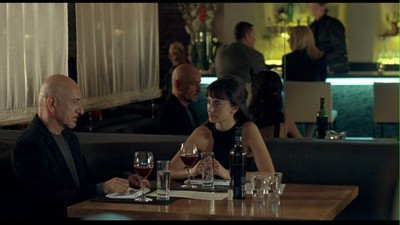


The art of the movie adaptation is a hot topic at the moment. As I write this, Watchmen is new to theatres, and the comic book blogosphere is ablaze with questions of was it too faithful, was it not faithful enough, and is it even a good movie regardless? While fans of books that get turned into movies are often demanding in their desire for accuracy, the accepted wisdom is generally that in the move from one media to another, changes have to be made to make the story work. What makes a scene come alive on a page is different than what makes it come alive on a movie screen.

One of the arguments for why Alan Moore and Dave Gibbons' Watchmen was unfilmable was that a major subtext of its story and, by its nature, how it was told, was as inherent to and critical of the comic book medium as oxygen is to our continued existence in this atmosphere. I bring this up as the long way around to point out that what makes Philip Roth's 2001 ode to the aging male libido, The Dying Animal, work as a feverish and hypnotic novel is the way it is narrated. The lead character, lecherous professor David Kepesh, relates the story in a breathless manner, speaking to an unseen listener (the reader?), and sharing his reactions and thoughts on what has been happening to him, complete with tangents, flashbacks, and pontifications.

That narration is not gone in its entirety in director Isabel Coixet and screenwriter Nicholas Meyer's 2008 film version, retitled Elegy, but it is significantly pared down, removing the urgency and the disgusting detail of the telling. To get some of that back, they have upgraded the character of poet George O'Hearn (here played by Dennis Hopper) to a more regular confidant for Kepesh (Ben Kingsley), but that still doesn't stave off the shift in the story's tonal quality. The title change, actually, points to a big difference. Elegy suggests something sophisticated, mournful, and reverential to whatever is being honored for its passing; The Dying Animal is primal, unguarded, decomposing, and gross.

The essential story of both book and novel is that Kepesh, a recurring Roth character and both an author and professor, is an aging libertine who uses his classroom as a way to pick up young women. Thinking himself a free and unencumbered sexual being, he is naturally taken aback when the latest object of his lust, the prim and achingly gorgeous Consuela Castillo (Penelope Cruz), so captures him that he finds himself bound to her in ways he would never have allowed in another relationship. He is jealous and needy, and when he can't get over that or his fear of commitment, he drives her away; yet, once she is gone, he remains obsessed.

Entwined in this are the somewhat opposing forces of Kepesh's other lover and his son. The lover, Carolyn (Patricia Clarkson), is another former student, though one Kepesh first bedded in the 1960s. She offers him the kind of sexual relationship he has always clamored for and one that is also more age appropriate, yet even she expects exclusivity. She is freedom with limits, the kind that says don't get too free. On the other hand, his son, Kenny (Peter Sarsgaard), hates his father and his lifestyle, hates what it did to his mother when Kepesh ran out on her, and thus is all the more devastated to discover that he is turning into an adulterer himself. Though, oddly, one who creates a bizarre moral framework to his cheating. He is a philanderer with binding principles, the exact opposite of what daddy strives for.

The story quite delicately brings all these things together--the ideas of personal freedom, sexual desire, and aging--and attempts to show them as linked. Kepesh is not just struggling against the natural decomposition of the human form, but of his ideals. Consuela is young and beautiful, and she also is a test of his intellectual conceits. Next to her, David Kepesh is a pathetic straw man full of insubstantial belief; yet, her own personal problems also bring his philosophy on sex and dying into sharper focus.
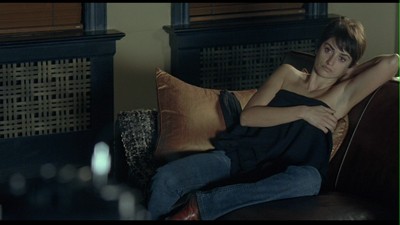


Philip Roth is quite often labeled a misogynist, though from my admittedly limited experience with his writing, I'd say that one must stretch their justifications quite far to prove that Roth doesn't fully understand and intend for his reader to see someone like David Kepesh as a creep and a fraud. I didn't see him as a lofty and tragic figure brought down by the evil influence of a woman, but as a man so out of touch with himself as to not understand what he truly needs.

Interesting, then, that this work of macho posturing has been brought to the screen by a female director. Isabel Coixet's previous credits include such challenging works as The Secret Life of Words and My Life Without Me, so she's not afraid of tackling tough, complex subjects. I think it would be easy to suggest that Elegy softens the proselytizing and decreases the bodily fluids from The Dying Animal due to her feminine hand, but I really doubt that is the case. Some of the more foul aspects of the sexual humiliations that pass between Kepesh and Consuela (the trade-off between submission and domination is a major theme) wouldn't make it past the MPAA anyway, the story would have been dialed down regardless. Instead, I think Coixet and Nicholas Meyer--a man, obviously, and no stranger to adapting Roth, having previously penned The Human Stain--are trying to remove some of the harsher aspects of Kepesh's character, the things about him that might repulse the audience when made flesh, so that they might get to the brutal core of his thought processes and turn it into drama. The novel has the benefit of Kepesh's seductive prose to draw the reader in even as his less-than-ideal traits push us away, like peering into a gory wound; the movie, on the other hand, is putting the words into action and doing so without the benefit of a running commentary.

The result is a final product that is more human instead of being so rampantly masculine, more psychologically effecting without being luridly troublesome. The same amount of acid, but perhaps less reflux. This is aided in part by Coixet and director of photography Jean Claude Larrieu's choice to shoot Elegy in a style that is more real than fancy, underlit and often sterile, not quite documentarian but at least seeming to be in a real space. The job is then finished by the remarkable cast. Ben Kingsley plays Kepesh without vanity, letting his age show and slowly allowing the intellectual mask that Kepesh wears over his weaknesses to dissolve.

Arguably, the movie belongs to Penelope Cruz, even if for just achieving the impossible task of wresting the male gaze away from itself and making her character real. In the story's emotional climax, Roth allows Kepesh to "make it all about me," whereas Coixet gives Roth's characters the license to be sensitive in ways the poetic situation demands. Cruz keeps Consuela from being yet another mysterious, idealized woman, but instead makes her a real person. The sympathy we have for her keeps us from having misguided sympathy for Kepesh--the dying animal can really be a beast. Ironically, Coixet also photographs Cruz's body in the most loving and sensual way, making her look as classic and beautiful as the Goya painting David says looks like her. In that, the director manages to portray love in a way Roth never could. The Kepesh of the book can only stare with hungry desire, the author's fetish for verbiage turning every tiny goosebump into a potential sex toy; Coixet's camera shoves Kepesh out of the way and takes a good look for itself, and what it finds waiting is something different and more three-dimensional than what Roth offered up.

That said, Coixet and Meyer do trip over the finish line, creating a coda of redemption that seemingly accepts the cliché of what Hollywood is supposed to do when it adapts a book to the screen. David Kepesh at the end of The Dying Animal is still his own worst enemy, a selfish threat to his own well-being; David Kepesh at the end of Elegy is ready to be the things he spent so long creating a moral philosophy to avoid. Both endings are bittersweet, but the movie version is a tad mawkish. It's salvation that Kepesh hasn't earned, forgiveness without contrition, and though it's not a selling out of sufficient baseness to destroy the movie, it does show that not all Hollywood concessions make for a better adaptation.
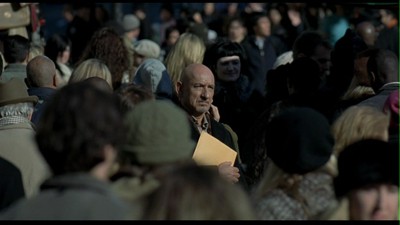


The full DVD Talk review, including technical specs and extras.


e-mail = golightly at confessions123.com * Criterion Confessions * Live Journal Syndication * My Corporate-Owned Space * ComicSpace * Last FM * GoodReads * The Blog Roll * DVDTalk reviews * My Books On Amazon

All text (c) 2009 Jamie S. Rich

Saturday, March 07, 2009

YOUR BODY LOST IN LEGENDS

Comic Book Resources has put up a preview of Madman Atomic Comics vol. 2, which collects issue #s 8-13. Go here to read a few pages from #8.

This book will go on sale this coming Wednesday, March 11. This is the cover:


The collection has a ton of extras, including a long look at the construction of #9, which you may recall was the one that ran as one continuous piece of action.

An Amazon link: Madman Atomic Comics Volume 2: Electric Allegories! (v. 2)

ADDENDUM TO THE WATCHMEN POST:

It's kind of funny seeing people in the comics field, fans and pros alike, fume about changes that were made to the Watchmen movie, particularly the ending, which I had no problem with--though I also had no problem with the original ending of the book and find them both to be equally implausible when you get right down to it. Still, it's "the studios this" and "Hollywood that" and "the studios, Hollywood, the studios."

I'm sorry Team Comics, but I am not sure we all have much room to get upset about what adaptations do to our precious classics, since the screwing goes both ways. Has anyone ever stopped to think about the staggering amount of bad comics that have been made either adapting or, most often worse, spinning out of Hollywood movies? Even the great untouchable Alan Moore wrote a couple of Star Wars tales once upon a time, and if they weren't crappy, people might actually remember them.

The big difference, actually, is that as an industry, comics continue to be developmentally disabled, so that when we adapt successful properties, it's rare that anyone makes any money. Maybe that's what we're really sore about. As I said to someone else recently, "That high horse of yours is a My Little Pony."

Curren Soundtrack: Leonard Cohen, Songs of Love and Hate

Friday, March 06, 2009

DR. FILTH, HE KEEPS HIS WORLD


I've just got back from seeing Watchmen, and I feel like I let Zack Snyder gave me a facial for three hours. And not the good kind that leaves my skin feeling fresh and where I end up looking prettier when it's done, but the porno kind.

Don't listen to the apologists. I understand how badly fans want to like things like this, but if you have been waiting more than twenty years for this movie, then you should really be more demanding, you deserve better than one man indulging his personal fetish for latex and corn syrup. Just because Snyder got a few things exactly right, that doesn't make up for the fact that he got it wrong in every way that matters. It's like listening to a full CD for a couple of really wicked drum solos. There are a lot of bad lyrics, false melodies, and cheesy guitar riffs to get through to hear some lummox bang on the cans.

Actually, there is a lesson to be learned from the music. Snyder commissioned My Chemical Romance to cover Bob Dylan's "Desolation Row." Be it good or bad (and I kinda like it), the band did in three minutes what Zack Snyder could not do in 186: they made what they were adapting into their own thing, made it work in the context of what they were doing. It's clear to me that Snyder never stopped and asked, "Is there a better way to do this that makes more sense for motion pictures?" Comics are not the same thing as movies, I am not sure how he didn't get the memo, and so sticking to the panel-by-panel didn't work. Scenes were too long, and some of the visuals came off as way too heavy handed. I mean, really? You think keeping the smiley face on the surface of Mars was a good idea? A slavish attention to detail is laudable in its way, but a dogmatic blindness to what makes the storytelling is not.

So much of the movie could have been cut down. The extensive histories of the various characters, including the Comedian, could have been chucked to make the story move faster. Removing the subplot between Laurie and Sally Jupiter would have also trimmed out the unnecessary, but even more important, those scenes play to Snyder's weaknesses. The guy has no ability to direct human emotions. Whenever he tried, it was just bad melodrama. Then again, this is the director whose music cues include playing "The Sounds of Silence" over a funeral scene and Leonard Cohen's "Hallelujah" during the flick's lone sex scene. These are not just lazy choices from a filmmaker with a limited vocabulary, but the latter also inspired laughs throughout the audience.

Seriously, just because Rorshach's mask looked cool doesn't make up for the fact that the motion-capture version of Dr. Manhattan didn't. Just because some of the prison riot was exciting doesn't excuse that the other action sequences are overly choreographed and devoid of life. Just who was it that decided that something exciting should have a pause in the middle? Would you want to be watching a basketball game and when the star player goes up for a big dunk, he hangs in mid-air for a second? He might as well stop and eat a sandwich before putting the ball in, he's already destroyed the adrenaline rush.

There maybe wasn't a good movie lurking in Watchmen, but there could have at least been a passable one. Get rid of the extraneous side stories, cut down the long chats, and stick to the mystery that is at the heart of the plot, and at least you'd have a decent capes-and-tights whodunit. Instead, we've got a boring whendoesitend.


UPDATED TO CRITERION CONFESSIONS...

Exclusive to my Criterion blog this week:

* Ali: Fear Eats the Soul, Fassbinder's early '70s tribute to Sirk.

* Dodes'ka-den, a DVD release of one of Akira Kurosawa's quirkiest films.


THIS WEEK IN DVD REVIEWS...

* Far from the Madding Crowd, John Schlesinger reteams with Julie Christie in an epic, romantic adaptation of Thomas Hardy.

* In the Electric Mist, Bertrand Tavernier tackles a James Lee Burke novel with mixed but mostly good results. Tommy Lee Jones stars as Burke's Detective Dave Robicheaux.

* Murnau, a collection of six of F.W. Murnau's silent films from Germany, including Nosferatu, Faust, and The Last Laugh.

* Paul Newman X 2: The Helen Morgan Story, a fairly average biopic about a doomed singer, and The Outrage, Martin Ritt's perplexing remake of Rashomon.

* The Romance of Astrea & Celadon, an Eric Rohmer period piece that gets stuck up its own class.

* The Starter Wife - Season 1, Debra Messing is charming in some wholly forgettable but time-killing television fluff.

* Yentl, the Babra Streisand musical is a real eye-opener.

Current Soundtrack: Keane, Perfect Symmetry

e-mail = golightly at confessions123.com * Criterion Confessions * Live Journal Syndication * My Corporate-Owned Space * ComicSpace * Last FM * GoodReads * The Blog Roll * DVDTalk reviews * My Books On Amazon

All text (c) 2009 Jamie S. Rich

Thursday, March 05, 2009

YOU ONLY GIVE ME YOUR FUNNY PAPER

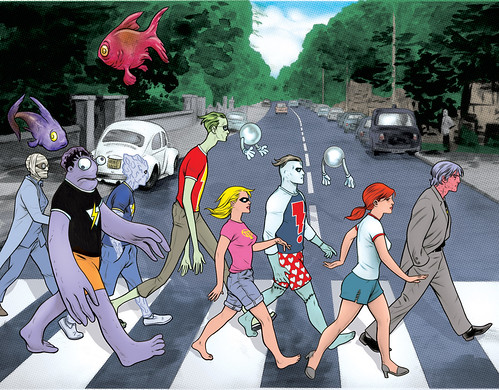
By the way, I should mention that in addition to You Have Killed Me being solicited for May, the Diamond catalogue also has Madman Atomic Comics #16 in the Image section. It's the one with the Abbey Road cover.

Madman Atomic Comics #16


What it doesn't tell you is that Joëlle Jones and I have a 12 page story in that issue, "Last Night the Atomics Saved My Life." So, if you order You Have Killed Me at your local comic book shop, consider ordering Madman Atomic Comics #16 as well. It's there on page 158 of the catalogue.

Current Soundtrack: Why, yes, I am still listening to It's Not Me, It's You

Monday, March 02, 2009

COMICS ARE ALL AROUND

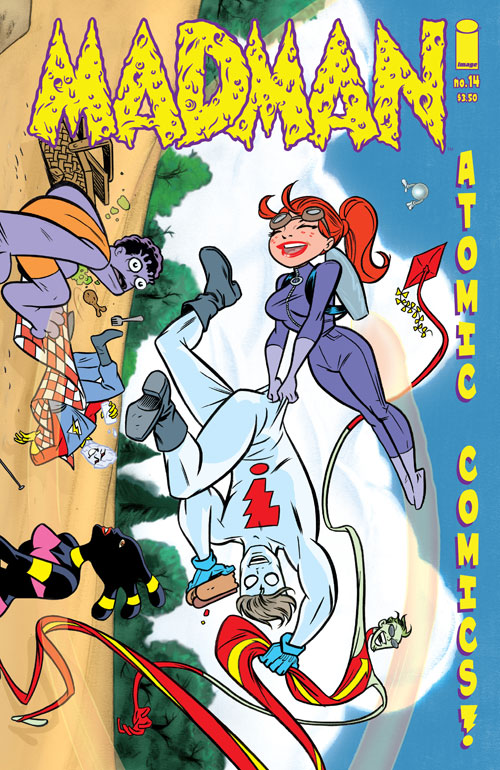
* Madman Atomic Comics #14 is on sale this week. It features two short stories, one by Mike Allred and the other by Darwyn Cooke & J. Bone.


Joëlle is pencilling our story for #16, which is also in the new Diamond Previews alongside You Have Killed Me. May should be a good month for us. The pages she have done so far are remarkable.

* I really like this page that Natalie Nourigat posted the other day. The construction of it is really swell.


It's from a Virginia Woolf-adaptation/minicomic she plans to have at Stumptown. More details here, here, and everywhere.

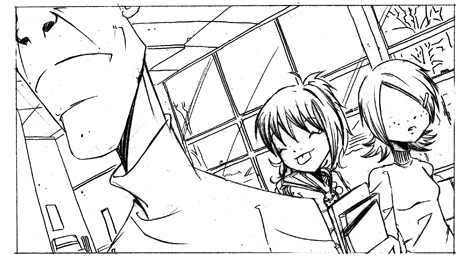
* I also really like this panel from a page Nico sent me:


I actually have a near-complete draft of Spell Checkers vol. 1 written now. I just have to write a two or three page epilogue, which I am going to let simmer for a bit, probably until after I've read over what I've already done.

* And I still really want this. I can't help it.

Current Soundtrack: Antony & the Johnsons, "The Rapture;" some Ennio Morricone; Depeche Mode, "Useless;" Elbow, "Any Day Now"

e-mail = golightly at confessions123.com * Criterion Confessions * Live Journal Syndication * My Corporate-Owned Space * ComicSpace * Last FM * GoodReads * The Blog Roll * DVDTalk reviews * My Books On Amazon

All text (c) 2009 Jamie S. Rich
Sunday, March 01, 2009

The Dying Animal The Dying Animal by Philip Roth


My review


rating: 4 of 5 stars


I've always liked Roth and had bought this book as a slightly mashed copy on a bargain table several years ago. I pulled it out to read in anticipation of reviewing the DVD of Elegy, the film adaptation from last year. The Dying Animal is a short novel, and one that I must like in spite of myself, in spite of my often horrified reaction to the selfishness and intensity of the sexual peccadilloes of its narrator. David Kepesh is one of Roth's regular characters, and the man who turned into a giant tit in the appropriately titled The Breast, a parody of Kafka and one of the funniest things I've ever read. (Inside joke in this book being an admiration of a hand-written Kafka manuscript binding Kepesh with his fetish object.)

Kepesh isn't so much an unreliable narrator as one that is both myopic and didactic regarding the myopia. His story here is one of obsession regarding his long-term existence as an unapologetic, often evangelical libertine, and the crystallization of that lifestyle in one woman, the 24-year-old Consuela Castillo, and her rather large chest. The 62-year-old Kepesh becomes so overtaken by his desire for her, it begins to threaten the cavalier lifestyle he has so meticulously constructed.

What makes The Dying Animal slightly sickening to read is Kepesh's effusive recounting of his pleasures with Consuela. Talk about the male gaze, this book is one long, creepy stare! What makes me feel pangs of guilt, though, is how mesmerizing it can be, almost like Kepesh is hypnotizing me. Roth writes the book in long paragraphs, no dialogue breaks, just strings of traded conversation, and it compels the reader to move quickly through the novel, to feverishly go from page to page.

The "sex and death" coupling is nothing new, but Roth has inextricably entwined them here in this narrative. To borrow a metaphor he uses in the book--though he relates it as the trade-off of subservience and domination that is part of any sexual encounter--it is as if he has braided the two, creating one criss-cross strand where once there was a pair (and, admittedly, a pair that began from the same source, as the hair would come from the same head). Since The Dying Animal begins with so much about youth and carnality, the switch to ruminations on the aging process and mortality is surprising. Roth even creates a counterpoint to Kepesh's remorseless pursuit of Consuela by introducing us to David's estranged son, who so hates how his father lives, he thoroughly demands the opposite of himself even when it causes him terrible misery.

I think Roth is aware that there for all his belief in his own powers of observation, Kepesh is ironically unaware that the story he intends to share about Consuela is never about anyone but himself. Even in the emotional climax, where the knowledge of death prematurely comes to the young, he can't see the frightened heart beating beneath those great big breasts, he only sees the loss of his own desire. Or thinks he does, because it is also never more evident how out of control of his own life he is. I suppose this be a spoiler of sorts--so beware!--but there is a profound narrative switch on the very last page that will take some time to chew on and digest. Throughout the book, it has been made clear that Kepesh's monologue is meant to be a literal one, that he is speaking to someone directly, some invisible witness, a stand-in for the reader. In the last lines, not only does the witness speak up, but for the first time, Roth relates the call-and-response between him and Kepesh as separately rendered paragraphs (though the witness in quotes, Kepesh still not). It's a dramatic change, a last-chance grabbing at something that could be slipping away. Are we implicated now as the confidante, having read all the way to this end? Is Kepesh's obsession now our own?

And how the hell can the movie of this exist without either removing some of Kepesh’s beastly opinions or risk the entire audience thinking Ben Kingsley is the biggest slimeball to ever grace the silver screen? Because how can one not be more sympathetic to Penelope Cruz--particularly since in a film we will see her as something more whole than the idealized creature presented through David Kepesh’s eyes? Questions I will have to answer in another review. [Edit: That review now available here.]


View all my reviews.


Current Soundtrack: Antony & the Johnsons, The Crying Light

e-mail = golightly at confessions123.com * Criterion Confessions * Live Journal Syndication * My Corporate-Owned Space * ComicSpace * Last FM * GoodReads * The Blog Roll * DVDTalk reviews * My Books On Amazon

All text (c) 2009 Jamie S. Rich
Saturday, February 28, 2009

KITE FLYING SOCIETY

Best news I've heard in a good long while:

IDW is reprinting The Rocketeer in one massive hardcover with new colors by Laura Martin.


You can bet I'll be buying the tricked-out special edition.


Current Soundtrack: Polly Scattergood, s/t (as recommended by Nico)

Thursday, February 26, 2009

RISKY AND PRETTY

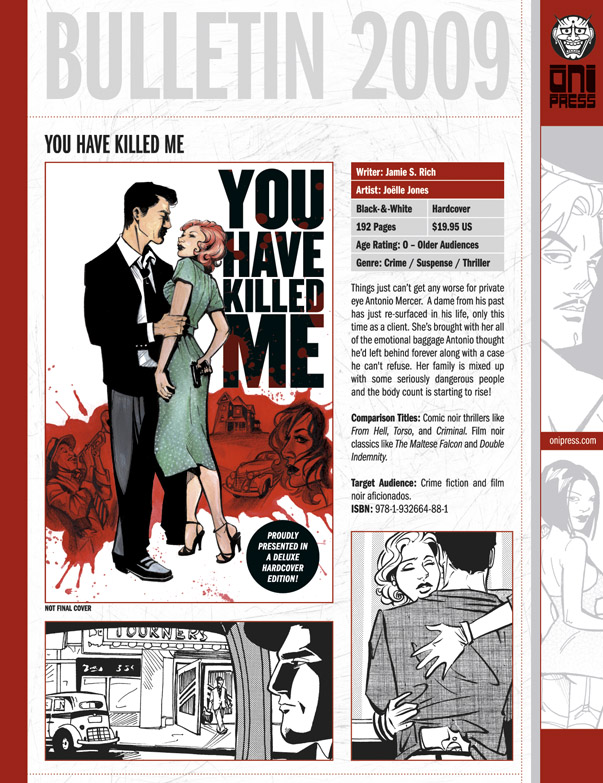
You Have Killed Me has officially been solicited for May. This is a publishing date that should stay firm, since the book is all drawn and being lettered right now. (In fact, Doug probably received my notes on the first batch and has been cursing my name ever since...)

Below is the page from Diamond Previews advertising the book in the Oni section.


Diamond Order Code for Comic Book Shops: MAR094379
ISBN for other book outlets: 978-1-932664-88-1 - this is the same isbn that was on the canceled solicitation last year, so some outlets may have a lag time getting an update with the new info, just so you know.

Preorder with confidence!

My understanding is that the 2nd printing of 12 Reasons Why I Love Her is also offered in the catalogue, and at cover price, too, rather than the $185 premium it's running at now. Should be an exact replica of the previous edition, just missing the numeral 1 on the indicia page. (Though, I did suggest at one point we do a new cover for it, but apparently, as they say, that dog did not hunt.)

Current Soundtrack: Lily Allen, It's Not Me, It's You

e-mail = golightly at confessions123.com * Criterion Confessions * Live Journal Syndication * My Corporate-Owned Space * ComicSpace * Last FM * GoodReads * The Blog Roll * DVDTalk reviews * My Books On Amazon

All text (c) 2009 Jamie S. Rich
Wednesday, February 25, 2009

THE VIEW FROM THE AFTERNOON

Pop Matters today has reviewed a high water mark of my editorial career, Andi Watson's Breakfast After Noon. Read about it, then go pick yourself up a copy.


And I can't remember if I ever shared this before. It's the sole piece of art from an unrealized joke project between myself and Andi, a kid's book called "Sherbert & Lolly." I believe it began as me making fun of British desserts, and eventually evolved into me making jokes about how Andi and his wife would have been as children. It was never a serious endeavor.


Current Soundtrack: The Bird and the Bee, Ray Guns Are Not Just The Future

Tuesday, February 24, 2009

GOD! SHOW ME MAGIC

Nicolas Hitori de sent a new page from Spell Checkers. It's actually his first page in the book, if not the first page he's drawn.


Some tasty graffiti is going on those lockers. I'll leave it to your imagination. Maybe we should do a thing where you can draw your own on there.

It should be a fun book. I wrote the beginning of the script in a fit of dementia, so working on it last week was like revisiting a party where I got too drunk to really remember everything I did, but someone taped it and I was able to laugh at myself acting like an idiot.

Nico does pretty regular comic strips on his blog, but as of yet he hasn't started giving English translations so those of us who are uneducated in the languages of the world can read along. This lead to me translating one of the strips myself in his comments section, using the two years of high school French I cheated my way through.


Panel 1:

Excuse me, sir, but do I look like a poser to you?

That depends...

Panel 2:

Who would you consider your upper-most senor? Is that Jesus you have in your heart?

Panel 3:

No, but I have seen the devil dance in the pale moonlight. And he was eating peaches.

Panel 4:

Don't attend anymore parties! I will help you and your immortal soul with my Bible!


Someone helpfully provided a real translation, too.

Current Soundtrack: War Child - Heroes, vol. 1 - a great charity compilation with covers from Duffy, Elbow, Franz Ferdinand, Estelle, Hot Chip, Lily Allen, Yeah Yeah Yeahs, TV on the Radio, Scissor Sisters, and more. Currently downloadable at Amazon for a mere $3.99! (CD slightly more expensive.)


e-mail = golightly at confessions123.com * Criterion Confessions * Live Journal Syndication * My Corporate-Owned Space * ComicSpace * Last FM * GoodReads * The Blog Roll * DVDTalk reviews * My Books On Amazon

All text (c) 2009 Jamie S. Rich

Sunday, February 22, 2009

SO LONG, NUKE, OL' BUDDY

My friend's very sweet dog, Nuke, passed away today.


He had health problems, so at least he is released from whatever pain he was in. Still, that doesn't lessen the impact of the occurrence or the sadness felt.

Make sure to give your own pet a little extra attention today, in honor of Nuke. Let's never take our little friends for granted.

And spare an extra thought for Bobby and Aaron, as well.
I ACTUALLY DO PREDICT AN ACTUAL RIOT

Okay, this is getting out of hand:

179 Reasons Not to Buy This Book Now

Copies of 12 Reasons Why I Love Her must be selling at some of the exorbitant prices I have seen, because they are getting worse. $179 and more?!

I think it's a great book, but by no means worth that price. The comic may be out of print, but only temporarily. I am assured it will be back in print by May when You Have Killed Me is released. Seriously, you can wait until then, can't you?

We are in an economic crisis, after all.


Current Soundtrack: Devotchka, "Hot Burrito #1 (I'm Your Toy);" Dr. Dre, Nas, & T.I., "Topless"

Thursday, February 19, 2009

PORTLAND INTERNATIONAL FILM FESTIVAL, REVIEW 7: DEAN SPANLEY

So, here we are at the end. This is my last review for PIFF. Hope everyone enjoyed the festival!

Dean Spanley (New Zealand; dir. Toa Fraser)

Dean Spanley is an inconsequential but surprisingly winning puff piece about dogs and reincarnation.

That's right, dogs and reincarnation.

Another quirky comedy from down under, Dean Spanley is set in early 20th-century England, shortly after the Boer War. The Fisks lost first one of their sons to the conflict, and then the mother of the family when grief overtook her. This leaves old man Horatio Fisk (Peter O'Toole, looking like the grim reaper himself these days) and the son he calls the Younger Fisk (Jeremy Northam). Dad is a jaded old man who doesn't go in for sentiment, not even grieving, and is prone to saying whatever is on his mind. This leads to many outbursts that are amusing for those watching, but mortifying for his son.

A chance attendance of an Indian swami's seminar on reincarnation leads Fisk Jr. to meet Dean Spanley (Sam Neill), an open-minded priest whom Horatio has run into before. In addition to his interest in alternative religions, the Dean has a taste for rare Hungarian wine. Fisk Jr. uses this predilection to befriend the clergyman, enlisting an outgoing middleman, Wrather (Bryan Brown), to procure the elusive brown elixir. Once Dean Spanley has tasted of his favorite tipple, he begins to unspool a tale of his own past life as a dog, a narrative that draws in all the other parties involved, revealing deeper connections between them and providing the catalyst for healing in the Fisk clan.

There is neither anything to love nor anything to hate in Dean Spanley. It rolls along at a well-considered pace, each piece of its heartwarming and amusing story falling into place without much fuss. The ensemble cast is all very good at what they do, with Peter O'Toole proving he is still the master showman, and the director, Toa Fraser, knows to stay out of the way and just let them all get on with it. Though Dean Spanley works on all fronts, what makes it an affable pleasure also makes it come off as slight. It's the kind of thing you see, enjoy, and forget.

Unless you're a dog person, and then you might find some deeper meaning in the tale of the puppy that got away. I am a cat person myself and resent that the filmmakers had to resort to tearing down felines in order to build canines up. I suspect dog lovers are so mean spirited because they secretly know they don't have the four legs to stand on. Cats rule, dogs drool!

Dean Spanley plays on 2/21. - PIFF's website at the NW Film Center


Current Soundtrack: Ocean Colour Scene, B-Sides, Seasides & Freerides


e-mail = golightly at confessions123.com * Criterion Confessions * Live Journal Syndication * My Corporate-Owned Space * ComicSpace * Last FM * GoodReads * The Blog Roll * DVDTalk reviews * My Books On Amazon

All text (c) 2009 Jamie S. Rich
PORTLAND INTERNATIONAL FILM FESTIVAL, REVIEW 6: LION'S DEN & THE BEACHES OF AGNES

PIFF's website at the NW Film Center

These two may be my favorites of all the ones I saw for PIFF.


Lion's Den (Argentina, dir. Pablo Trapero)

It's been a long time since I've seen as good an opening to a thriller as the first ten minutes of Lion's Den. Following a disconcerting animated credits sequence featuring a sing-a-long with South American children--I wondered it they had switched screenings on me--we get a series of quick-cut scenes where the film's heroine, Julia (Martina Gusman), slowly comes out of a state of shock to realize that there have been two bloody murders in her home. The way director Pablo Trapero (alongside three other writers) pulls you into the plot is deftly executed, moving rapidly to knock the audience off balance and put us in Julia's shoes.

Because from there, Lion's Den isn't really a thriller, but a prison drama about a young mother in a situation that has gotten out of her control. Unable to give a feasible account of the evening--which involved her lover and his boyfriend in a knife fight, leaving the boyfriend dead and the lover, Ramiro (Rodrigo Santoro), badly wounded--Julia is locked up pending trial. Since she is a couple of months along in a pregnancy, she is assigned to a maternity ward where convicted mothers can raise their own children until they are four. Depressed and nauseous with morning sickness, Julia takes a while to adjust to life inside, but eventually she becomes part of the community, even taking a lover, Marta (Laura Garcia), and using her outside connections to get goods for the inmates. Several years pass, and all the while Julia keeps fighting for her freedom. When her mother (Elli Medeiros) tricks her into taking her young son away, however, everything unravels.

Lion's Den is a harsh story filmed in a gritty style and lacking in any overt sensationalism. The script taps into a universal fear--of being caught in a legal system you can't get out of and incarcerated--and adds a specific and unique wrinkle I don't think we've seen in cinema before. The maternity prison is like a daycare center in Hell, a lethal combination of violence, boredom, and dirty diapers. A unique setting is nothing without a great character, however, and Julia is a fully realized human being with a real journey to undergo. The selfish, bleach-blonde girl at the start of the picture is vastly different from the confident, fierce mother that exits the final frame. Outside of one previous acting credit (Trapero's 2006 film Born and Bred), Martina Gusman has almost exclusively been a producer up until now and even has an executive producer credit on Lion's Den. Whatever prompted the switch deserves some kind of tribute or monument, because she's utterly convincing as Julia. So much so, I have cause to wonder if she really was pregnant during shooting. If not, Gusman sported the most impressive prosthetic belly I've ever seen. The performance shows an amazing range that is likely only just scratching the surface of her ability.

The film ends somewhere in the same territory where it began, with final scenes closer to a thriller than the hard-edged drama that passed between. Yet, neither the beginning nor the end feel disjointed from the middle, the transitions are as natural as Julia's changes. Behavioral action drives life, and it can drive a very good movie, as well. Lion's Den is one to look out for.

Lion's Den plays on 2/20 and 2/21.


Martina Gusman at Cannes for Lion's Den (a.k.a. Leonera).


The Beaches of Agnes (France; dir. Agnes Varda)

The new film by Agnes Varda is the memoir of an inventor, an essay by a prankster, and a documentary about a life in cinema. Altogether playful and seductive, while also at turns heartfelt and poignant, The Beaches of Agnes frames the remembrances of the famed director--the feminine voice of the French New Wave--in a series of mirrors. Varda recreates scenes from her life and from her films, intercut with actual home movies, photographs, and clips from those same films, sometimes side by side with the reenactments. The new stagings reflect the settings as they are now, with the past being taken over by the present that has replaced it. In the case of fallen comrades, Varda casts their children in their roles, including a fantastic scene that conjures her debut feature, La Pointe-courte. Varda takes unseen footage of test films she shot with friends and mounts it on a cart that was pushed through a narrow alleyway in the movie. The man featured in the film died while his children were young, and they never knew him as he is in the grainy black-and-white footage. As they move the cart forward, they watch the old reel--the past leads them on.

In recent years, Varda has created many museum installations that combine actual objects with video, and in its way, The Beaches of Agnes is an extension of that. It's one big art happening, a live multimedia staging, beginning with Varda positioning mirrors along a sandy coastline and ending with her in a room built entirely of film strips. As much of her life has been marked by visits to beaches around the world, the seaside becomes her stage. The constant flow of the tide is just like the flow of time. At eighty, Varda has seen and done a lot and known some of the greatest artists of the 20th century. This film is a tribute to all of them and their accomplishments, be they moviemakers, bakers, or musicians. It is also a tribute to the connections they made along the way.

The Beaches of Agnes is never overly sentimental or self-pitying. Varda celebrates even as she mourns. That's why, even at a near two-hour running time, her peculiar autobiography never gets boring. For some who are not film buffs familiar with the director's work, there may be a feeling of "you had to be there" in some of the cinematic ruminations, but overall, a life glimpsed through such a colorful lens becomes the life of anyone who views it. If Agnes Varda is cinema, and cinema is its audience, then we are all Agnes Varda.

The Beaches of Agnes plays on 2/20 and 2/21.


Current Soundtrack: Ocean Colour Scene, On the Leyline; The Prodigy, "O (Noisia Remix)"


e-mail = golightly at confessions123.com * Criterion Confessions * Live Journal Syndication * My Corporate-Owned Space * ComicSpace * Last FM * GoodReads * The Blog Roll * DVDTalk reviews * My Books On Amazon

All text (c) 2009 Jamie S. Rich

Wednesday, February 18, 2009

EVERYONE'S AT IT


THIS WEEK IN THEATRES...

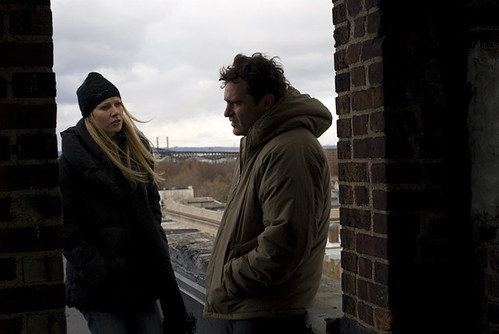
* Two Lovers, a rough and often tough-going romantic tale about the ups and downs of the heart. With Joaquin Phoenix and Gwyneth Paltrow.

* Over at my Criterion blog, I also review Revanche, an Oscar-nominee for Best Foreign Language Film this year. It's an excellent dramatic crime picture.

And don't forget my PIFF reviews. Three more movies will be up tomorrow.

THIS WEEK IN DVD REVIEWS...

* Cannery Row, a Steinbeck adaptation that falls short of the mark thanks to a strained and hokey stylistic nostalgia. With Nick Nolte and Debra Winger.

* A Guide to Recognizing Your Saints, an interesting but all too familiar coming-of-age tale that asks you to believe that Shia LaBeouf will become Robert Downey Jr.

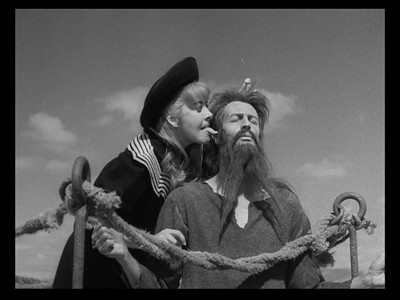
* Hobson's Choice - Criterion Collection, a wonderful comedy from director David Lean and actor Charles Laughton. (Also at Criterion Confessions.)

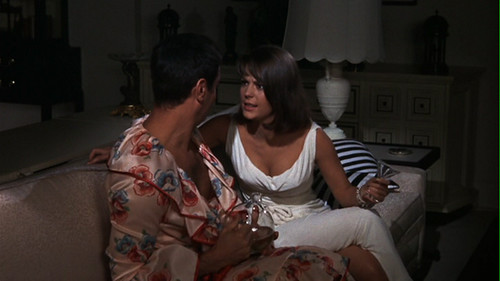
* Natalie Wood Signature Collection, a new boxed set that is mostly full of misses from the Warners back catalogue. It does contain the new edition of Splendor in the Grass, though.


Current Soundtrack: "Jeopardy" on TV

e-mail = golightly at confessions123.com * Criterion Confessions * Live Journal Syndication * My Corporate-Owned Space * ComicSpace * Last FM * GoodReads * The Blog Roll * DVDTalk reviews * My Books On Amazon

All text (c) 2009 Jamie S. Rich

Monday, February 16, 2009

PORTLAND INTERNATIONAL FILM FESTIVAL, REVIEW 5: GOODBYE SOLO

Goodbye Solo (USA; dir. Ramin Bahrani)

Solo (Souleymane Sy Savane), a Senegalese immigrant who drives a cab in North Carolina, takes an active interest in most of the people he picks up in his taxi, but when grouchy old William (Red West) offers him $1,000 to pick him up on a specific date and take him to the top of a mountain and leave him, Solo gets more sucked in than usual. William wants to go to Blowing Rock, a famous local attraction where the winds are so strong, anything that you toss over the side of the cliff will be blown back at you. Just what business does an old man like William have going up there? This is what Solo is determined to find out, and maybe once he knows, he'll also know how to stop it.

The latest from director Ramin Bahrani (Man Push Cart), Goodbye Solo is a strange, contemplative drama that is more content to hang back and observe than to fully jump into the situation. This puts the audience in Solo's shoes, then, since we want to figure out what is going on but, just like him, we can't get past William's hardened defenses. There is a little bit of new American ambition in Solo, while William is symbolic of an America that has decided to pack it in. Unable to change, they resign themselves to fade away.

Ironically, some of America's worst tendencies are rubbing off on Solo. Though at first he complains that no one in the U.S. sticks by family the way they do in Senegal, when things start to go bad in his marriage, he heads for the door, leaving his pregnant wife (Carmen Leyva) and stepdaughter (Diana Franco Galindo) behind. He pushes his way into William's hotel room, forcing himself into a semblance of a new family situation, and he starts to dig in to what is bugging William enough for the old man to call it quits.

Which is the last thing that William wants, and the few things that Solo does find out only deepen the mystery--has he lied about not having kids? Why did his wife leave him thirty years prior? Is there a significance to his chosen suicide date? Is he even committing suicide or merely disappearing? Bahrani is determined to keep the questions hanging, however, and so the full portrait of William is never drawn. It's a pretty risky choice, and I imagine it will alienate some viewers. Personally, I think it may have kept me from being fully immersed in the movie. William's lack of communication not only cuts off our avenue to him, but his disinterest in Solo means we don't fully know the other man, either.

At the same time, Bahrani's defiance of Hollywood narrative expectation in the climax is the perfect choice, avoiding giving easy answers to hard questions. There is a suggestion that William has connected with Solo and his stepdaughter more than he has let on, and his presence appears to have put Solo back on track rather than contributing to his derailment. Both Savane and West are excellent in their roles, achieving a directness and naturalism that lends credibility to the realistic tones of Bahrani's scripting. Goodbye Solo may not entirely satisfy at first blush, but the effect of it lingers, forcing those who accept it to ponder what has transpired and search for what it means to them.

Goodbye Solo plays on 2/17. - PIFF's website at the NW Film Center


Current Soundtrack: Morrissey, "Because Of My Poor Education/Shame is the Name"

e-mail = golightly at confessions123.com * Criterion Confessions * Live Journal Syndication * My Corporate-Owned Space * ComicSpace * Last FM * GoodReads * The Blog Roll * DVDTalk reviews * My Books On Amazon

All text (c) 2009 Jamie S. Rich

Sunday, February 15, 2009

DELAYED DEVOTION

Consider this a late Valentine's Day present. I just saw this for the first time this morning: Bettye LaVatte singing the Who's "Love Reign O'er Me."


Wow.

Friday, February 13, 2009

PORTLAND INTERNATIONAL FILM FESTIVAL, REVIEW 4: WORLDS APART

Worlds Apart (Denmark, dir. Niels Arden Oplev)

Sara (Rosalinde Spanning) is a 17-year-old girl who has been raised in the Jehovah's Witness religion in Denmark. Though she has never questioned her upbringing, Sara's devout father Andreas (Jens Jørn Spottag) gives her the first reason to doubt her faith when he strays from the marital bed. Sara's mother (Sarah Kjærgaard Boberg) chooses not to accept his repentance, which in their church gives her grounds for divorce. Mom moves out, and the three kids--Sara has a younger sister and an even younger brother--decide to stay with dad because he has done right by God in confessing. In a flash, the family has split.

At the right age to wonder what this all means, Sara extends her questions and experiments into a more broad social life and ends up meeting Teis (Pilou Asbæk), a surprisingly kind 23-year-old. He walks her home from a nightclub, and further dates lead to them confronting Sara's religious values and finding a modicum of acceptance. One night when Sara misses the train home, however, things go a little farther with some above-the-clothes making out. Not very good at covering her tracks, Sara gets in trouble with the Jehovah elders. Though at first she chooses God's love over man's, the feelings that have been stirred in her are more complicated than that.

It isn't hard to identify where Niels Arden Oplev and co-writer Steen Bille are coming from in this film, though the script doesn't fall as firmly against religion as one might expect. Rather, Oplev creates a surprisingly balanced narrative that gives both sides their say without being disrespectful to either. Sure, the church elders are closed-minded and humiliate Sara with their interrogations, but Teis and his parents are just as closed-minded, insensitive, and self-righteous. Teis never really weighs the depths to which Sara's church is tied to her family and everything she would have to give up for a life with him. Not even after seeing her brother Jonas, who has been kicked out of the brood for reading the wrong books (Jehovah's Witnesses only read religious texts from their own denomination) does Teis fully accept the completeness of Sara's exile.

Based on a true account of one girl's struggles, Worlds Apart is a complicated story, and though a little heavy handed toward the end, a quietly compelling one. Oplev has a rather plain shooting style, one that reflects the humanity of the situation as well as the choices against materialism that Sara and her family have made. The actors are all just as unmannered and naturalistic, with each individual performer distinguishing him or herself with their sympathetic portrayals. Characters expose their own hypocrisies through word and action, and Sara's dwindling beliefs only lose their fortitude when faced with real and believable tests. As a coming-of-age story, her trek is not so much a dismantling of religion, but of a sheltered individual peeking her head out from that shelter to see what else is on offer. The greatest hypocrisy she encounters on both sides is a lack of compassion, and Sara's true desire is just to be left alone and to let others do as they wish in return. She also proves it takes more courage to stand on her own rather than take refuge in the strength of numbers.

Worlds Apart plays on 2/16 and 2/20. - PIFF's website at the NW Film Center


Current Soundtrack: Edwyn Collins, Home Again


e-mail = golightly at confessions123.com * Criterion Confessions * Live Journal Syndication * My Corporate-Owned Space * ComicSpace * Last FM * GoodReads * The Blog Roll * DVDTalk reviews * My Books On Amazon

All text (c) 2009 Jamie S. Rich
LET ME TELL YOU ABOUT MY BOAT

Marc Ellerby sent me a heads up that this week's episode of the iFanboy video podcast, #108, is devoted to Romance Comics.

Naturally, Love the Way You Love and 12 Reasons Why I Love Her get a mention about twelve minutes in (how appropriate). Got to about 10:30, though, and they also talk about Andi Watson and Love Fights. Of course, watch/listen to the whole thing. They talk about a lot of good books, covering a wide variety of comics that touch on relationship themes.

The iFanboy page.

Thanks, guys!

Current Soundtrack: The Yardbirds, "Shape of Things;" The Zombies, "Got to Get a Hold of Myself;" Manic Street Preachers, "Born to End"
PORTLAND INTERNATIONAL FILM FESTIVAL, REVIEW 3: JERUSALEMA

Jerusalema (South Africa, dir. Ralph Ziman)

There is nothing in Jerusalema that we have not seen before in better films. If I had to pitch it, I'd call it "City of God coupled with American Gangster, but directed with gritty modern realism a la Michael Winterbottom." If you've seen either of those two films, then the story arc of Jerusalema will be familiar to you. Lucky Kunene (Jafta Mamabolo), a young boy living in the South African slums, turns to a life as a carjacker when poverty scuttles his plans to get an education. After some hairy violence, he moves to the Hillsboro slum of Johannesburg, and Lucky the man (Rapulana Seiphemo), tired of small-time hustling, develops a scheme whereby under the auspices of being a charitable organization, he will take over run-down tenements left to rot by their white slumlords. Eventually, he runs afoul of police and other gangsters, and the young punk who dreamed of being legitimate gets his comeuppance.

Stories like this, particularly when there is no flashy filmmaking style to distract us from the familiarity of the narrative, rise and fall on the charisma of their villains. In the case of Jerusalema, this is best in the early scenes with the teenaged crooks. Young Lucky and his partner Zakes (Motlatsi Mahloko as the boy, Ronnie Nyakale as the adult) are a funny and likable duo who are as naïve about the criminal world as they are ultimately dangerous. Once Jerusalema moves into the big city, it quickly grows long in the tooth. Ralph Ziman, who wrote the screenplay as well as directing the picture, seems to have no idea what parts of the story are the most important, and so he shows everything he can. The mis-en-scene is crammed full, with zero regard for logical timelines or natural progression. For instance, how does Lucky recover from bullet wounds faster than a man who died before he was shot can be buried?

Though Seiphemo is potent as the powerhouse Lucky, his arch nemesis, a cop played by Robert Hobbs, appears to be the South African equivalent of David Caruso. Equally unconvincing is the crusading reporter that shows up intermittently to help contextualize what is happening. These clichés could have easily been dropped and possibly have made way for some greater debate regarding the underlying political issues that inform Lucky's pseudo-Robin Hood philosophy. Ziman never really even confronts whether the criminal entrepreneur actually believes the claims he makes about race and class, nor does he do any more than imply that maybe Lucky is just as bad a landlord as the men he replaced, and so the character's ideological downfall is too long in coming and totally hollow when it finally arrives.

Jerusalema plays on 2/14 and 2/18. - PIFF's website at the NW Film Center


Current Soundtrack: XTC, Fossil Fuel: XTC Singles 1977-92


e-mail = golightly at confessions123.com * Criterion Confessions * Live Journal Syndication * My Corporate-Owned Space * ComicSpace * Last FM * GoodReads * The Blog Roll * DVDTalk reviews * My Books On Amazon

All text (c) 2009 Jamie S. Rich
Wednesday, February 11, 2009

PORTLAND INTERNATIONAL FILM FESTIVAL, REVIEW 2: SHALL WE KISS?

Shall We Kiss? (France, dir. Emmanuel Mouret)

This gentle romantic comedy starts off as if it were a simple cream puff, but the closer you get to the center, the more you realize there is some nourishment inside. Or, at the very least, someone added some good liquor to that cream before they whipped it.

Emilie (Julie Gayet) and Gabriel (Michaël Cohen) meet by chance when she is on a business trip, and after a nice evening together, Gabriel proposes "an inconsequential kiss." Emilie refuses, alleging that there is no such thing, and as an offer of proof, she extends their evening with a story of two friends who found this out the hard way. The lovely Judith (Virginie Ledoyen, 8 Women) and Nicolas (Emmanuel Mouret, who also wrote and directed) have been the closest of friends since high school. After a particularly painful break-up, Nicolas asks Judith for some love and affection to fill the void left by his ex. Despite being married, Judith obliges him, thinking it a one-time thing, but both end up enjoying it more than they meant to and further efforts to disentangle themselves from this tryst only leads to them falling in love. Well, first, they discuss what love means, and then they realize they are in it. This pair discusses everything in a calm, distracted, almost academic manner, and yet always end up right where they say they won't be. With this simple device, Mouret lays on the wit while also proving his point that no matter how much the head tries to lead the way, the body has more sway.

The deeper that Nicolas and Judith go, the more serious the emotions, but the more broad the comedy. They hatch a plot to lure Judith's husband (Stefano Accorsi) into his own affair, thus freeing him to love someone else, but the irony is that their Three's Company-scheme only ends up forcing the cuckold to be the adult in this situation. So, too, must Emilie and Gabriel try to be adults. They are both in long-term relationships, but the storytelling on both sides--Gabriel also shares the tale of how he met his girlfriend--has lured them into the same trap, stoking the fires of romance and laying temptation at their feet. (Though, some may argue Gabriel never stops thinking with his little head, rather than the big one, and he is lust where Emilie's desire is something else.) In the end, Mouret lets the different choices the two couples make reverberate without drawing comparisons for the viewer; rather, it's the kind of ripples that these decisions cause in all of their lives that he also wants to send out beyond the edges of the movie screen, and to be effective, they must allowed to hit their targets all on their own.

Shall We Kiss? plays on 2/12 and 2/14. - PIFF's website at the NW Film Center


Current Soundtrack: Radiohead, In Rainbows


e-mail = golightly at confessions123.com * Criterion Confessions * Live Journal Syndication * My Corporate-Owned Space * ComicSpace * Last FM * GoodReads * The Blog Roll * DVDTalk reviews * My Books On Amazon

All text (c) 2009 Jamie S. Rich

Friday, February 06, 2009

PORTLAND INTERNATIONAL FILM FESTIVAL, REVIEW 1: TOKYO SONATA

The 2009 Portland International Film Festival is underway, and I've been fortunate enough to sit in on a sampling of press screenings. Though my spotty attendance means I can't really offer any comprehensive coverage here on my blog, I can at least share with you what I have seen and make sure to point you to PIFF's website at the NW Film Center.

I will post my capsule reviews no less than the day before the first public screening of each film to give folks time to plan their own attendance schedule. So, expect more updates over the next couple of weeks.

Tokyo Sonata (Japan; dir. Kiyoshi Kurosawa)

Kiyoshi Kurosawa's Tokyo Sonata begins with Ryûhei (Teruyuki Kagawa, Sukiyaki Western Django), a career salary man in his mid-40s, losing his job. He can't face up to telling his family, and so instead pretends to go to work every day, hanging out in the park and waiting for a new job to materialize. His lie sets off a chain reaction of deception and change in his family. His youngest son Kenji (first-time actor Inowaki Kai) begins to secretly take piano lessons even after being told he can't, and the little smart ass discovers he's actually something of an artist. Meanwhile, the eldest son Takashi (Yû Koyanagi) is far from the screw-up his self-involved father thinks he is, and he makes the grave decision to join the U.S. Army as a foreign volunteer, believing he can protect Japan and, by extension, his family. Trying to sort it out is the longsuffering mother, Megumi (Kyôko Koizumi, Kûchû teien), who sees more than she lets on and tries to help everyone realize their own path, believing that purpose to be her own.

The first 2/3 of the movie play out like a tribute to the old-school films of Yasujiro Ozu. Kurosawa revels in the quiet moments, moving his focus from one family member to the next, letting their individual stories unfold in their own fashion. Koizumi is wonderful as the mother, conveying the inner fatigue through body language and a subtlety of voice even as she maintains total strength on behalf of her children. The young Inowaki Kai is also fantastic as the young boy who has learned to be defensive and obnoxious, but who really yearns for an expression that is more nuanced. I wish we had spent more time with the older boy, too, but then that might have also been one story too many, so Kurosawa ties him more closely to the mother. Throughout, the camera is an unobtrusive presence, maintaining a quiet observance rather than insisting that we recognize the mastery of Kurosawa's shots.

Unfortunately, the final act of Tokyo Sonata goes haywire. Kiyoshi Kurosawa employs one of my biggest storytelling pet peeves, inserting a new, supposedly random element into the plot that strikes a false chord in the otherwise sincere story. (See my tirade against Breillat's Fat Girl for more on this sort of thing.) A bumbling robber enters the family's home and takes Megumi hostage, injecting both violence and broad humor into a movie that has so far stayed grounded. The crook is played by Kôji Yakusho, whom most American viewers will likely recognize from his role in Babel, which is fitting since Kurosawa is trying to make a mini-version of that whole everything-is-connected-and-yet-nothing-is genre in the last half hour of Tokyo Sonata. The experiences of father, mother, and son grow more divergent, hitting their own levels of tragedy and pain before they all finally end up back home. It doesn't work, though. Too much coincidence, too much deus ex machina, and for lack of a better ending, Kiyoshi Kurosawa sells his own film short.

Tokyo Sonata plays on 2/8 and 2/15.


Current Soundtrack: Morrissey, Years of Refusal; Lily Allen, It's Not Me, It's You


e-mail = golightly at confessions123.com * Criterion Confessions * Live Journal Syndication * My Corporate-Owned Space * ComicSpace * Last FM * GoodReads * The Blog Roll * DVDTalk reviews * My Books On Amazon

All text (c) 2009 Jamie S. Rich

Thursday, February 05, 2009

SATAN REJECTED MY SOUL


THIS WEEK IN THEATRES...

* Coraline, the long-awaited new effort from Nightmare Before Christmas-director Henry Selick is a pretty looking dud.

THIS WEEK IN DVD REVIEWS...

* The Sidney Poitier Collection, three good movies, including Martin Ritt's Edge of the City with John Cassavetes and Something of Value with Rock Hudson, sit next to one clunker. Three out of four, still pretty good.

* Simon of the Desert - Criterion Collection, Luis Bunuel's satirical and clever portrait of religious devotion, complete with a sexy devil, Silvia Pinal. (Also at Criterion Confessions.)


Current Soundtrack: The View, Which Bitch?


e-mail = golightly at confessions123.com * Criterion Confessions * Live Journal Syndication * My Corporate-Owned Space * ComicSpace * Last FM * GoodReads * The Blog Roll * DVDTalk reviews * My Books On Amazon

All text (c) 2009 Jamie S. Rich

Wednesday, February 04, 2009

MAKE IT HAPPEN

The Popgun website has updated to feature exclusive story previews for the 3rd volume. Joëlle's and my story is not there, but if you want to see what else you will be in for if you pick up the book, click on this:


Then either preorder it from your local comic book store, or use this link to Amazon: Popgun Volume 3 (v. 3)

Also, what are you doing tomorrow night?

I'll be beginning the night here:


I should be hanging out for the first half hour or so. For more details on what else is happening at the store, click the image.

Then, at 6:30, a group will be assembling there to begin a First Thursday Graphic Novel Walking tour, hosted by PNCA. I am listed as the guest celeb or whatever the hell you'd call me for this. Here is the write-up.

'Join us for a guided gallery walk of Portland's show openings beginning this Thursday February 5th, with an intensive look at new work relating to graphic novels and sequential arts. We'll begin the tours at Floating World Comics on 5th and Couch streets promptly at 6:30 p.m. Each gallery walk is hosted by a PNCA docent and figure from Portland's outstanding comic culture. Tours will stop at Upper Playground, JustBe Compound, Backspace Café, the Sequential Art Gallery and Pony Club along with new galleries and other shows at the Everett St. Lofts. Time permitting, we'll wind up the evening with a brief comics jam and opportunity to post work on the Graphic Novel Web Showcase site. This free event is a fantastic opportunity to speak with the artists and network with other comics creators while enjoying the 1st Thursday festivities.

Our "artist in residence" for February’s walk is the amazing talented and fun to talk to Jamie S. Rich. Co-creator of the "Love the Way You Love" series, and forthcoming detective comic, “You Have Killed Me” published by Oni Press.'


So, come join us!

Current Soundtrack: Electronic, Twisted Tenderness

Monday, February 02, 2009

WHO AM I THAT I COME TO BE HERE...?

Oh, did you hear? You Have Killed Me is done. Joëlle turned in the final pages last night. Hurrah! At long last, and well worth the wait. I'd show you a page from her final batch, but it would spoil the climax. Trust me, though, you've never seen Ms. Jones drawing so well.

Oni should be resoliciting this for May. This video remix should tide you over until then...


Oh, and a reminder that Madman Atomic Comics #13 will go on sale for real this Wednesday.

Current Soundtrack: A Patch of Blue director's commentary